

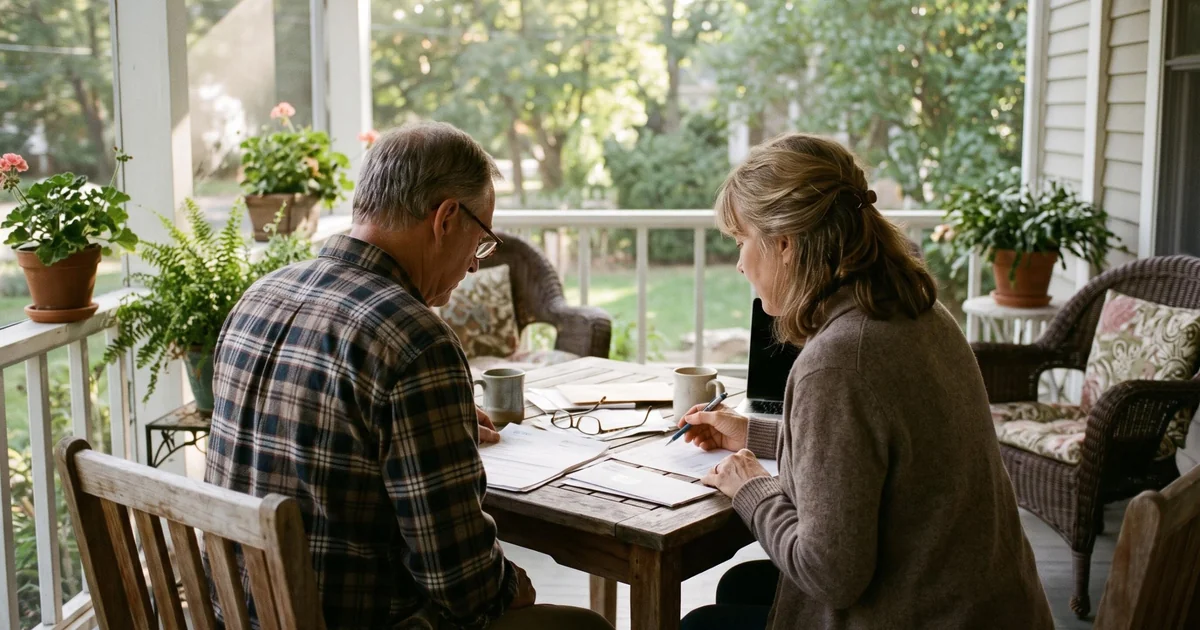
Transfer on Death Deeds
in Oklahoma
How They Work, Including Mineral Interests
Published October 25, 2026 | Reading Time: 23 minutes
Many Oklahoma families own their most valuable assets in the form of land: the house, a farm, a rent house, a commercial building, or mineral interests that have been passed down for three generations. When the owner dies, that land is usually the asset that drags the family into probate. A transfer on death deed promises a way around that, with a single recorded document and no trust to manage.
That promise is real, and Oklahoma has allowed these deeds since 2008. More than 30 American jurisdictions now permit real estate to pass by a transfer on death deed, according to the American Bar Association’s latest uniform laws update. But the deed is unforgiving. A missed deadline, a beneficiary who dies first, or a signature from the wrong person can send the property right back into the probate the owner was trying to avoid.
We were business owners before we practiced law, and we look at estate tools the way an owner looks at any contract: what does it do well, and where does it break? This guide covers how Oklahoma TODDs work, the nine month rule, mineral interests, the most common problems, and how the deed compares with a trust, joint tenancy, and a will.
💡 The Short Answer
Oklahoma allows an owner of real estate, including surface rights and mineral interests, to record a transfer on death deed (often called a TODD) that names who receives the property at death. The owner keeps full control during life and can revoke or change the deed at any time. At death, the property passes to the named beneficiary outside of probate, but only if each beneficiary records a sworn affidavit and a death certificate with the county clerk within nine months of the owner’s death. Miss that deadline and the interest reverts to the owner’s estate, which usually means probate.Table of Contents
- What Is a Transfer on Death Deed?
- How an Oklahoma TODD Works
- The Nine Month Affidavit Rule
- TODDs for Oil and Gas Mineral Interests
- Common Problems With TODDs in Oklahoma
- TODDs vs. Trusts, Joint Tenancy, and Wills
- When a TODD Makes Sense
- What Business Owners Should Know
- Oklahoma Specific Considerations
- Frequently Asked Questions
- A Simple Deed Still Needs a Plan
What Is a Transfer on Death Deed?
A transfer on death deed does nothing until the owner dies. It is signed, recorded in the county land records, and sits quietly in the chain of title. The owner still owns the property outright, and the named beneficiary has no ownership and no say in what happens to the land. At the owner’s death, ownership passes to the beneficiary without a probate court order.
The concept is the same one behind the payable on death designation on a bank account or the transfer on death registration on a brokerage account. Oklahoma extended it to real estate in the Nontestamentary Transfer of Property Act, which took effect November 1, 2008. The Act lets a record owner place an interest in real estate in “transfer on death form” by recording a deed that names one or more grantee beneficiaries.
What Property Qualifies
The statute expressly includes surface rights, minerals, structures, and fixtures. That covers the family home, farm and ranch land, rentals, commercial buildings you own personally, and severed mineral and royalty interests. It does not cover real estate titled in your LLC or held in a trust.
Why Owners Use Them
Oklahoma probate takes months at a minimum, as our guide on how long probate takes in Oklahoma explains, and it puts the family’s real estate in a public court file. A TODD can move a house or a mineral interest with a recorded affidavit instead of a court case, it takes far less to put in place than a funded trust, and the owner gives up nothing during life.
How an Oklahoma TODD Works
The mechanics are set by a strict statute that courts and title examiners read closely. Here is the life cycle of a TODD under Oklahoma law.
Signed by the Record Owner and Recorded Before Death
The deed must be signed by the record owner, acknowledged before a notary, and recorded with the county clerk in the county where the land sits, all before the owner dies. The statutory form also calls for two witnesses. A deed found in a desk drawer after the funeral does nothing. If the property lies in more than one county, the deed has to be of record in each of them.
No Notice or Consent From the Beneficiary
The beneficiary does not have to sign, agree, or even know about the deed while the owner is alive. That privacy is useful, but it means beneficiaries are often surprised at death and unaware they have a deadline.
The Owner Keeps Complete Control
The owner keeps legal and equitable title for life and is treated as the absolute owner with respect to creditors and purchasers. The owner can sell, mortgage, or lease the property without asking the beneficiary. If the land is sold, the deed has nothing left to transfer.
Revocable and Changeable at Any Time
The owner can revoke the beneficiary designation at any time before death by recording a revocation, or change it by recording a new TODD. A later TODD revokes all earlier designations for that interest. One rule surprises people: a will cannot revoke a recorded TODD. If you record a TODD naming your son and later sign a will leaving the house to your daughter, the deed controls.
What the Beneficiary Receives
The beneficiary takes the owner’s interest subject to mortgages, liens, leases, easements, and prior conveyances of record. A TODD does not pay off the mortgage; the loan comes with the house.
⚠️ A Will Cannot Fix a TODD
Because a will cannot revoke a recorded TODD, an outdated deed can quietly override a carefully drafted estate plan. Families run into this after a divorce, a remarriage, a falling out, or the death of the named beneficiary. Do not count on a new will to undo an old deed. Have counsel review any recorded TODD whenever your family or your plan changes.The Nine Month Affidavit Rule
The single most important feature of an Oklahoma TODD is one most owners never hear about: the beneficiary has to act after the owner dies, and on a deadline.
What the Statute Requires
To accept the property, each beneficiary must sign an affidavit confirming the owner’s death, whether the owner and the beneficiary were married at the time of death, and the legal description of the property. The owner’s death certificate is attached, and the affidavit must be recorded with the county clerk. For deaths on or after November 1, 2011, the affidavit must be recorded within nine months of the owner’s death. If it is not, the beneficiary’s interest reverts to the owner’s estate.
The property then passes under the owner’s will, or under intestacy law if there is none, as described in our guide to what happens if there is no will in Oklahoma. Usually that means a probate case for an asset the family thought was handled.
Each Beneficiary Accepts Only for Himself or Herself
Since a 2023 amendment, a beneficiary can accept only his or her own interest (or that of an entity the beneficiary has authority to act for). One sibling cannot sign for three brothers and sisters. If three children are named and one never records, that child’s share can revert to the estate while the other two pass cleanly.
📊 How the Deadline Plays Out
An owner leaves a quarter section of minerals in Grady County to her three children by TODD and dies in March. Two children record affidavits in June. The third lives out of state and learns of the deed a year later. His one third reverts to her estate. Even if her will leaves him the same share, he generally gets it only through probate, with his royalties held in suspense meanwhile.The 2026 Attempt to Change the Rule
The Legislature passed House Bill 3500 in 2026, which would have replaced the fixed nine month deadline with a process tied to the probate creditor claim period and beneficiary notice requirements. Governor Stitt vetoed it. The governor’s veto message called the current rule a bright line and warned that a probate driven process would cloud title and invite litigation over who owns the property. The nine month rule remains the law, and families should plan around it.
TODDs for Oil and Gas Mineral Interests
Oklahoma’s TODD statute names minerals specifically, and mineral owners use it often. A family may own small fractional interests across a dozen counties, and probating them can cost more than they earn in a year, before any ancillary probate for out of state owners.
Why Minerals Are Different
Mineral interests raise problems a house usually does not:
- Multiple counties. The deed works only in the counties where it is recorded, and the beneficiary’s affidavit has to be recorded where the property lies. Minerals in six counties mean six sets of records to get right, on both ends.
- Operators and division orders. Operators generally will not change who they pay until they see recorded title evidence. Until the affidavits are of record, royalties are typically held in suspense, and a beneficiary may later be asked to sign a division order confirming the inherited interest.
- Unknown interests. Families often do not know every interest the owner held. A TODD that describes some tracts and misses others leaves the missing tracts to pass through probate or an heirship process.
- Old title problems. A TODD passes only what the owner actually held. If the owner’s own title was never cleared after a prior death in the family, the beneficiary inherits that gap too, and it may still require heirship affidavits or curative title work.
Suspended Royalties and the New Payment Rules
When a beneficiary misses the deadline or the paperwork is incomplete, money sits. Oklahoma already holds a large amount of unclaimed property, with the State Treasurer reporting roughly $1.4 billion in unclaimed assets. Oklahoma’s royalty payment rules also change on November 1, 2026, under House Bill 1371. When royalties are held because a probate is needed to clear title, interest stops accruing, and the operator must send those proceeds to a new Mineral Owner’s Fund at the State Treasurer within 180 days after they come due. A missed TODD affidavit can put a family’s royalties on exactly that path. Our post on HB 1371 and the new royalty payment rules covers what mineral owners and heirs should watch for. Once funds are turned over, the owner’s recovery is limited to that fund and is claimed from the State Treasurer rather than the operator, and mineral proceeds that are never remitted are presumed abandoned after 36 months and move into the State Treasurer’s unclaimed property program.
🛢️ Questions to Settle Before Using a TODD for Minerals
- Do we have a complete, verified list of every mineral and royalty interest, by county and legal description?
- Is the owner’s own title clear, or are there gaps from earlier deaths in the family?
- Are any interests restricted Indian interests that follow federal rules instead of the state statute?
- Are there interests in other states that Oklahoma’s statute cannot reach?
- Who will make sure every beneficiary records in every county within nine months?
- Would a trust or an entity hold scattered interests more cleanly than a deed?
Restricted and Out of State Interests
Restricted Indian mineral interests follow federal law, so do not assume a TODD will carry them; our guide to mineral title and the Stigler Act explains why. And Oklahoma’s statute reaches only Oklahoma land. Minerals in Texas or Kansas follow those states’ laws.
Common Problems With TODDs in Oklahoma
The deed is simple to create and easy to get wrong. These are the problems we see most often.
1. The Beneficiary Misses the Nine Month Deadline
The most common failure. Families do not know the deadline exists, beneficiaries live out of state, or one sibling assumes another handled it. The deed was valid, but the transfer fails anyway.
2. The Wrong Person Signed the Deed
In Estate of Jones v. Miller, decided in 2024, a woman’s sister signed a TODD for her using a durable power of attorney. The Oklahoma Court of Civil Appeals held the deed ineffective: the statute requires the record owner’s signature, and an agent can create a beneficiary designation only with express authority, which general property powers did not supply. If a parent can no longer sign, an agent signed TODD is a serious risk. Our guide to powers of attorney in Oklahoma covers what those documents can and cannot do.
3. A Beneficiary Dies Before the Owner
If a beneficiary dies before the owner, that beneficiary’s transfer lapses. It does not pass to the beneficiary’s children unless the deed provides for it. If beneficiaries were named as joint tenants with right of survivorship, the survivors take the share; if not, the lapsed share can fall back into the estate. Contingent beneficiaries and the form of joint ownership are drafting decisions, not blanks on a form.
4. Joint Owners
A joint tenant’s TODD takes effect only if that joint tenant outlives every other joint owner. If spouses hold the house as joint tenants, only the husband signs a TODD, and he dies first, the house goes to his wife and his deed does nothing. Knowing exactly how title is held is the starting point.
5. Homestead and Spousal Rights
Oklahoma’s homestead protections generally require both spouses to sign documents affecting the family home, even when only one is on title, and title examiners generally expect, as we recommend, both spouses’ signatures on a homestead TODD. Our guide to Oklahoma homestead rights explains why a TODD does not eliminate that requirement. The TODD statute also says beneficiaries take free of certain elective share claims by someone who married the owner after the deed was signed, which can surprise a later spouse.
6. Minor Beneficiaries
A minor can be named but cannot manage or sell real estate. Without a custodian or a trust, the family may need a court appointed guardian before the property can be leased or sold. A custodian under Oklahoma’s Uniform Transfers to Minors Act works much like a custodial bank or investment account for a minor, but for larger holdings a trust is often the better beneficiary.
7. Bad Descriptions and Title Questions
A street address alone, an outdated description, or one that misses part of the tract creates the same title problems as any defective deed, and mismatched mineral descriptions are common. When the beneficiary later sells, the title company examines the deed, the affidavit, and whether anything was revoked or lapsed. One major underwriter’s 2008 Oklahoma underwriting bulletin on transfer on death deeds recommended that title agents not prepare them, calling them an estate planning device for legal counsel. Mistakes made at signing tend to surface years later, at closing.
TODDs vs. Trusts, Joint Tenancy, and Wills
A TODD is one of several ways to pass Oklahoma real estate. Each has a different balance of cost, control, and risk.
| Feature | TODD | Revocable Trust | Joint Tenancy | Will |
|---|---|---|---|---|
| Avoids probate | Yes, if every beneficiary records on time | Yes, for property titled in the trust | Yes, at the first death | No |
| Owner keeps full control | Yes | Yes, as trustee | No, the joint owner has rights now | Yes |
| Covers incapacity | No | Yes, successor trustee steps in | No | No |
| Manages for minors or heirs who need help | No, unless a trust or custodian is named | Yes | No | Only through a testamentary trust |
| Exposes property to another owner’s creditors or divorce | No, during the owner’s life | No | Yes | No |
| Works for many assets at once | No, one deed per interest and county | Yes | No | Yes, through probate |
| Upfront effort | Low | Higher, and the trust must be funded | Low | Low |
TODD vs. Living Trust
A revocable living trust does more: it manages property during incapacity, holds property for young or vulnerable beneficiaries, keeps all assets under one set of instructions, and avoids the nine month affidavit race. The tradeoff is upfront work and actually titling assets in the trust. For one house and a simple family, a TODD may be enough. With minerals in several counties, a business, a blended family, or beneficiaries who need oversight, a trust is usually stronger. Our guide to trust administration and the successor trustee’s role shows what the other side of that choice looks like.
TODD vs. Joint Tenancy
Adding a child as a joint tenant also avoids probate, but it gives the child a present interest that the child’s creditors and divorce can reach, and you need the child’s signature to sell or mortgage. A TODD avoids that because the beneficiary owns nothing until your death. Joint tenancy can also cost a tax benefit: property inherited at death generally receives a step up in cost basis, while the portion given away during life does not.
TODD vs. a Will
A will directs where property goes but does not avoid probate, though small estates may qualify for the Oklahoma small estate affidavit. A will and a TODD can work together only if they are coordinated, because the deed wins any conflict.
When a TODD Makes Sense
✅ Situations Where a TODD Often Fits
- A single home or tract, owned outright or with a manageable mortgage
- Adult beneficiaries who are responsible, get along, and live close enough to act quickly
- A simple family with no prior marriages or children from other relationships
- An owner who wants to avoid probate for one asset without building a full trust
- A backup for property that may never make it into a trust
⚠️ Situations That Call for Something More
- Minor beneficiaries, or adult beneficiaries with creditor, addiction, or disability concerns
- Blended families and second marriages
- Mineral interests across many counties or states
- An owner who may need long term care or is concerned about incapacity
- Property that will be held and managed by several heirs for years
- Business real estate or property that should stay with a business
Long term care deserves its own mention. State Medicaid programs must seek repayment of certain long term care costs from the estates of recipients age 55 and older, as explained by Medicaid.gov and in this KFF overview of estate recovery. Oklahoma’s program can also place a lien on a recipient’s real property in some circumstances, and the Oklahoma Health Care Authority’s recovery policy says those liens stay with the property after a transfer. A TODD is not a Medicaid planning tool.
What Business Owners Should Know
Property Owned by Your LLC
If your building or rental portfolio is titled in an LLC, the LLC owns it, and your personal TODD does nothing for it. Succession runs through your membership interest, governed by your operating agreement and any buy sell terms. Our guides to LLC operating agreements and buy sell agreements cover how to plan for an owner’s death at the entity level.
Property You Own Personally but the Business Uses
A building owned personally and leased to the operating company is common. A TODD could send it to a child with no role in the business, leaving the company as that child’s tenant. If the business is meant to continue, the real estate plan and the business succession plan have to point the same direction.
Coordinating Beneficiary Designations
TODDs, retirement accounts, life insurance, and payable on death accounts all pass outside your will and are easy to forget, from ex spouses still listed to missing backups, as this Chase guide to beneficiary designation mistakes describes. A TODD belongs on the same review schedule.
Oklahoma Specific Considerations
Oklahoma’s TODD law has its own history and quirks that national articles miss. Our Oklahoma estate planning attorneys can review an existing TODD or help decide whether one belongs in your plan.
The Statute and Its Amendments
Oklahoma adopted its Nontestamentary Transfer of Property Act in 2008. It predates the Uniform Real Property Transfer on Death Act that many other states later adopted, and its requirements differ. The Legislature has amended the section governing acceptance in 2010, 2011, 2015, and 2023. The nine month recording deadline applies to deaths on or after November 1, 2011, and the 2023 amendment requires each beneficiary to accept only his or her own interest. The 2026 effort to replace the nine month deadline was vetoed, so the current rules stand.
Recording Happens County by County
Every TODD, revocation, and affidavit is recorded with the county clerk where the land sits. Oklahoma has 77 counties, and records in one do nothing for land in another.
Property Taxes and Exemptions
The owner’s homestead exemption and any senior valuation freeze are tied to the owner and do not carry over to a beneficiary automatically, so the property’s tax treatment will likely change.
No Oklahoma Estate Tax
Oklahoma does not levy an estate tax or an inheritance tax, as the Tax Foundation’s 2026 state survey confirms. Federal estate tax applies only to very large estates, so for most families the basis step up at death matters more.
🧭 Oklahoma TODD Rules at a Glance
- Allowed since November 1, 2008, for surface, minerals, structures, and fixtures
- Must be signed by the record owner and recorded before death in each county where the land lies
- Revocable at any time by a recorded revocation or a later TODD; a will cannot revoke it
- Each beneficiary records an affidavit and death certificate within nine months of death, or that interest reverts to the estate
- A beneficiary who dies first loses the gift unless the deed provides otherwise
🚀 Get Your TODD Right the First Time
A recorded deed only works if it was drafted for your family and your property.
Cantrell Law Firm is a team of Oklahoma attorneys and former business owners. We help families, landowners, and mineral owners decide whether a transfer on death deed fits their plan, and we fix the ones that do not.
- Review of existing TODDs and beneficiary designations
- Estate plans that coordinate deeds, wills, and trusts
- Mineral interest planning across multiple counties
- Help for beneficiaries facing the nine month deadline
Confidential consultation • Prompt response • Oklahoma estate and mineral planning
Frequently Asked Questions
-
Does Oklahoma allow transfer on death deeds?
Yes. Oklahoma has allowed transfer on death deeds for real estate since November 1, 2008, under the Nontestamentary Transfer of Property Act. The deed can cover a home, land, buildings, and mineral interests owned by the person signing it.
Does a TODD avoid probate in Oklahoma?
It can, but only if each beneficiary records the required affidavit and death certificate within nine months of the owner’s death. A missed deadline sends that interest back to the estate.
Can I use a transfer on death deed for mineral rights?
Yes. The statute expressly includes minerals, but the plan has to account for every county, gaps in the owner’s title, and restricted or out of state interests the statute does not reach.
What happens if the beneficiary does not record the affidavit within nine months?
For deaths on or after November 1, 2011, the beneficiary’s interest reverts to the owner’s estate. The property then passes under the owner’s will or Oklahoma intestacy law, which usually requires a probate case. A 2026 bill to soften the deadline was vetoed.
Can I revoke or change my TODD?
Yes, at any time before death, by a properly executed and recorded revocation or new TODD. A will cannot revoke it.
What happens if my beneficiary dies before I do?
That beneficiary’s transfer lapses. It does not automatically pass to the beneficiary’s children. If beneficiaries were named as joint tenants with right of survivorship, the surviving beneficiaries take it; otherwise the lapsed share may fall back into your estate unless the deed was drafted to name an alternate beneficiary.
Can someone with my power of attorney sign a TODD for me?
It is risky. A 2024 Oklahoma appellate decision held an agent signed TODD ineffective because the statute requires the record owner’s signature and the power of attorney lacked express authority.
Does my spouse need to sign my TODD?
If the property is your homestead, Oklahoma’s homestead rules generally call for both spouses to sign documents affecting it, even when only one spouse holds title, and we recommend both signatures on a homestead TODD. How title is held between spouses also determines whether a TODD signed by one of them will ever take effect.
Does a TODD protect my property from creditors or Medicaid?
No. You remain the absolute owner for creditor purposes, the beneficiary takes subject to recorded mortgages and liens, and Medicaid liens can stay with real property after a transfer.
Can I name a minor or a trust as the beneficiary?
You can name either. A minor cannot manage real estate, so naming a custodian or a trust avoids the need for a court appointed guardian. A trust is often the better choice when the beneficiary is young or needs oversight.
Are there tax consequences to a TODD?
Recording one is not a completed gift, because you keep ownership and can revoke it. Property passing at death typically receives a stepped up income tax basis, and Oklahoma has no estate or inheritance tax.
Is a TODD better than a living trust?
It depends on the property and the family. A TODD is simpler for a single asset passing to capable adults. A living trust handles incapacity, minors, blended families, multiple assets, and long term management far better, and it avoids the nine month affidavit risk.
A Simple Deed Still Needs a Plan
A transfer on death deed is one of the most useful tools in Oklahoma estate planning and one of the easiest to misuse. It can move a home or mineral interest without probate while the owner keeps control, or it can fail over a missed deadline, a lapsed beneficiary, or the wrong signature.
The families who get the most from a TODD treat it as part of a plan rather than a form: they know what they own and how title is held, choose beneficiaries and backups deliberately, and coordinate the deed with their will, trusts, and business documents. If you are weighing a TODD against a trust, our guides to revocable trusts and irrevocable trusts are a good next read. If you are a beneficiary and the owner has died, the nine month clock is already running, and it is worth a call to counsel now. If probate turns out to be unavoidable, our Oklahoma probate attorneys can help move it forward.
Disclaimer: This article provides general information about Oklahoma transfer on death deeds and is not legal advice. The deed, affidavit, and recording requirements are strict, and the right approach depends on how title is held, your family, and the rest of your estate plan. Laws change and every situation turns on its own facts. For guidance on your specific situation, consult qualified Oklahoma counsel.
About Cantrell Law Firm: We are Oklahoma business attorneys and former entrepreneurs who help families, landowners, and mineral owners pass property to the next generation with fewer surprises. Learn more about our probate and estate planning practice. Contact us to discuss your transfer on death deed or estate plan.