

Oil Hit $100.
Now What?
Lease, Pool, Sell, or Hold Your Oklahoma Minerals
Published September 26, 2026 | Reading Time: 19 minutes
U.S. crude crossed $100 a barrel again on September 10, 2026, as fighting with Iran threatened tanker traffic through the Strait of Hormuz. If you own mineral rights in Oklahoma, you probably felt it before you read the headlines: more lease offers, more letters from mineral buyers, and possibly a pooling notice from the Oklahoma Corporation Commission.
High prices are good news for mineral owners. They are also when owners make their most expensive mistakes. Offers arrive with short deadlines. Pooling orders give you 20 days to choose. And an outright sale is permanent, no matter where oil trades next year.
This guide walks through each decision from the owner’s side of the table: how to read today’s prices, how to evaluate a lease offer or a pooling order, when selling makes sense, how each choice is taxed, and what Oklahoma’s new royalty payment law changes on November 1, 2026. If you are new to leasing, start with our guide to oil and gas leases for landowners.
Table of Contents
- What $100 Oil Really Means for You
- Evaluating a Lease Offer at Today’s Prices
- Got a Pooling Order? The 20 Day Clock
- Should You Sell Your Minerals?
- How Each Choice Is Taxed
- Making Sure You Get Paid Correctly
- Oklahoma’s New Royalty Payment Law
- Inherited Minerals: Fix Title First
- A Mineral Owner’s Action Plan
What $100 Oil Really Means for You
The price on the evening news is the price for oil delivered next month. It has been anything but stable. Over the past year, West Texas Intermediate ranged from $54.97 in December 2025 to $119.47 in March 2026. By September 24, WTI had eased to roughly $94, with Brent near $105.
The market does not expect $100 to last. The U.S. Energy Information Administration’s September Short Term Energy Outlook forecasts Brent averaging around $90 for the rest of 2026 and falling to about $74 in 2027 as production rises and inventories rebuild. When oil for later delivery trades below today’s price, traders call it backwardation. It matters to you because every buyer, operator, and lender values your minerals off that forward curve, not the headline.
Three practical consequences follow:
- Your royalty checks will rise, with a lag. Checks trail production by a month or more, so September’s spike shows up on later statements, and only for wells already producing.
- Offers rise, but less than the headline. Buyers and landmen price in the expected decline, so a lease bonus or purchase offer will not track spot oil dollar for dollar.
- Drilling responds slowly. Operators commit capital on multiyear price assumptions. Oklahoma had 51 active rigs as of September 20, up from 42 a year earlier. Early in the month, 21 of them were working the Cana Woodford and 18 the Granite Wash.
Federal policy also shapes the pace of development here. Our earlier analysis of executive orders affecting Oklahoma oil and gas covers the federal permitting and leasing backdrop.
💡 Spot Price vs. Your Price
Your royalty is paid on the price the operator actually receives at the point of sale, less production taxes and any deductions your lease and Oklahoma law allow. Regional price differentials, quality adjustments, and transportation mean your realized price rarely matches the WTI quote. Compare the price on your check stub with the benchmark for the same month before concluding you are underpaid.
Evaluating a Lease Offer at Today’s Prices
Landmen move fast when prices spike, and the bonus check gets all the attention. The lease terms matter more. Once a well is producing, the lease stays in force as long as production continues, which can mean decades. These are the terms to negotiate:
- Bonus per net mineral acre. Bonus data is private, which makes benchmarking hard. The most useful public source is recent pooling orders in your section and adjoining sections, which list the bonus and royalty options the Commission found fair nearby. Valor’s guide to benchmarking lease offers explains how to use them.
- Royalty fraction. One eighth is the historical floor, not the market rate. Larger fractions are common in active plays, and a higher royalty compounds across every barrel for the life of the well.
- Primary term. Three years is typical. A shorter term, or an option to extend that requires an additional bonus payment, keeps pressure on the operator to drill.
- Depth clause. Limits the lease to the formations the operator actually develops and releases deeper rights at the end of the primary term. In stacked plays like the Woodford, deeper rights can be worth as much as the lease itself.
- Pugh clause. Releases acreage outside the producing unit so one well does not hold all of your land.
- Post production costs. Oklahoma courts have generally held that the lessee bears the cost of making gas marketable, but lease language can shift costs to you. A clear “no deductions” clause is worth fighting for.
- Top leases. A top lease is signed now and takes effect only when your current lease expires. Be cautious about signing one without understanding the status of the existing lease.
⚠️ Do Not Sign the Landman’s Form As Is
The lease a landman hands you is the operator’s form, written to protect the operator. The royalty fraction, deduction language, depth limits, term length, and extension option are all negotiable. Most owners never ask. At $90 to $100 oil, operators want acreage, and that is when you have the most leverage to improve terms that will govern your minerals for decades.
Got a Pooling Order? The 20 Day Clock
If you do not lease, an operator with the right to drill in your spacing unit can ask the Commission to pool your unleased interest. Under the Commission’s own guide to the pooling process, the applicant must mail notice at least 15 days before the hearing and publish notice in the newspaper. An administrative law judge reviews the operator’s efforts to reach an agreement, testimony on fair lease terms in the area, and the estimated well costs.
Once the order issues, you have 20 calendar days from the order date to deliver a written election. Your choices are:
- Participate as a working interest owner by paying your share of drilling and completion costs, in exchange for your share of production after costs.
- Accept one of the bonus and royalty combinations listed in the order, which typically run from a larger cash bonus with a smaller royalty to little or no bonus with a larger royalty.
Miss the deadline and you are deemed to have elected the option with the smallest royalty and the largest bonus. The operator then usually has 35 days from the order to pay the bonus.
High prices make participation tempting. Be careful. You pay for the well at today’s service costs and bet on production over years when the forward curve points lower. A weak well, cost overruns, or a price collapse all land on working interest owners first. For most individual owners, participation only makes sense with a clear understanding of working interest economics and the cash to absorb a bad outcome.
The bonus versus royalty choice is closer than most owners assume. Here is a hypothetical:
- You own 10 net mineral acres in a 640 acre unit.
- Option A pays $1,500 per acre with a 3/16 royalty. Option B pays $500 per acre with a 1/5 royalty.
- Option A pays $10,000 more up front. Option B adds 1/80 of royalty on your 10/640 share, a decimal increase of about 0.000195.
- If the well grosses $500,000 a month early in its life, Option B adds about $98 a month, and less as production declines.
On those assumptions, the extra royalty takes more than eight years just to match the extra bonus, before accounting for decline. The math shifts for larger interests, for units likely to see several wells, and when the order includes subsequent well provisions, which give you a new election for each later well. Run your own numbers before the deadline.
✅ Pooling Order Checklist
Find the order date and count 20 calendar days. Deliver your election in writing to the address in the order, by a method that proves delivery. Confirm the unit, the formations pooled, and whether the order covers subsequent wells. Check the bonus and royalty math against your net acres. Calendar the bonus payment deadline and follow up if the check does not arrive. And remember that you can still negotiate a lease before the hearing, often on better terms than the order.
Should You Sell Your Minerals?
Mineral buyers are active because high prices make producing cash flow look attractive, and because they can buy undeveloped upside at a discount. Understanding how offers are built is the first step. According to Valor, buyers commonly start at 36 to 60 months of trailing royalty income for producing minerals, add unitemized value for undeveloped potential, and then apply a commodity discount of 20% to 40%.
That math has two implications. First, a trailing income figure includes months when oil sat in the $50s and $60s, and the commodity discount prices in the expected decline, so offers will not reflect $100 oil. Second, an unsolicited offer means the buyer believes your minerals are worth more than it is paying. Your job is to figure out how much more. The Mineral Rights Podcast walks through valuation methods in plain terms.
Reasons to sell:
- You need liquidity or want to diversify away from a single commodity.
- The interest is small and the paperwork outweighs the income.
- Heirs are scattered across several states and the interest will fractionalize further at the next generation.
- The offer is well above an independent valuation.
Reasons to hold:
- Minerals are perpetual. Leases expire; ownership does not.
- Stacked formations mean a unit drilled today can be drilled again for a different zone later.
- New permits or spacing applications in your section signal development. Check the OCC Well Data Finder before responding to any offer.
- You cannot buy them back.
Selling is not all or nothing. Owners can sell a fraction of an interest, sell minerals in one county and keep another, lease now and revisit a sale later, or move minerals into an LLC or trust so the family manages them as one asset.
⚠️ Read the Deed, Not Just the Letter
The offer letter describes one tract. The mineral deed the buyer sends may convey “all of Grantor’s right, title, and interest” in an entire county, sweeping in minerals you forgot you own. Watch for short acceptance deadlines, checks or drafts that treat cashing as acceptance, warranty language promising title you cannot guarantee, and buyers who will not share their title work. Limit the deed to the specific tract, depth, and interest you intend to sell.
How Each Choice Is Taxed
Leasing, holding, and selling are taxed differently, and the difference can change the right answer. The IRS publishes tips on reporting natural resource income, and the general rules look like this:
- Royalties are ordinary income, generally reported on Schedule E. Royalty owners can usually claim percentage depletion of 15% of gross income from the property, subject to income limits.
- Lease bonuses are ordinary income in the year received and are not eligible for percentage depletion.
- Sales of minerals held more than a year produce long term capital gain on the difference between the price and your basis.
- Inherited minerals generally take a stepped up basis equal to fair market value at the date of death. Many heirs never documented that value; a retrospective valuation can be worth the cost before a sale.
- Like kind exchanges. Mineral and royalty interests are real property, so sale proceeds can often be rolled into other real property under Section 1031, subject to strict deadlines. See our guide to 1031 exchanges.
Oklahoma adds two layers. The state’s capital gain deduction on Form 561 covers gain on Oklahoma real property owned at least five uninterrupted years; confirm with your CPA whether your sale qualifies. And Oklahoma’s gross production tax runs 7% on most production and 5% for the first 36 months of a new well, with your share deducted on your check stub. For other 2026 changes, see our Oklahoma 2026 tax legislation roundup.
🧭 Taxes Can Flip the Answer
A $200,000 offer on minerals you inherited last year, with a stepped up basis near that figure, may produce little federal gain. The same offer on minerals bought decades ago for $10,000 can produce a large one. Two owners in the same section can reach opposite conclusions on the same offer. Run the numbers with your CPA before you sign, not after.
Making Sure You Get Paid Correctly
Higher prices raise the stakes on every payment error. The Commission’s royalty owner booklet summarizes the rules under Oklahoma’s Production Revenue Standards Act.
- Timing. The first payment is due within six months of first sale. Interest accrues on late payments.
- Division orders. The division order states your decimal interest and is the document the operator pays from. Confirm the decimal before signing, and do not sign one that changes your lease terms.
- Check stubs. Each stub must show ten items, including the well, the month of sale, volumes, price, taxes, your decimal to at least six places, and your net share. You can request itemized deductions.
- Disputes. The Commission has no authority over payment of proceeds; those disputes go to district court. The Commission’s Public Assistance office at (405) 521-2613 can still help you find records and answer questions.
Checking your decimal takes two minutes. For a single unit well, divide your net mineral acres by the unit acres and multiply by your royalty fraction. With 10 net acres in a 640 acre unit and a 3/16 royalty, your decimal is 10 ÷ 640 × 0.1875, or 0.00292969. Horizontal wells that cross several units allocate production among them, so the math takes more steps, but the order or division order should show the allocation.
If payments stopped or never started, your funds may be in suspense because of a title problem, an unprobated estate, or an old address. Search the Oklahoma State Treasurer’s unclaimed property database for your name and those of relatives who owned minerals.
Oklahoma’s New Royalty Payment Law
The biggest Oklahoma development for royalty owners this year is not the price of oil. It is House Bill 1371, signed in May 2026 and effective November 1, 2026. The bill passed the House 88 to 3 after a unanimous Senate vote and was the product of a negotiated agreement between mineral owners and producers, sponsored by Rep. Anthony Moore and Sen. Grant Green. It is the most significant update to the Production Revenue Standards Act in decades.
What changes:
- Late payment interest. Where title is marketable, interest moves from 12% compounded to 15% simple. The 6% rate for unmarketable title remains, also calculated as simple interest.
- Interest pauses. Interest does not accrue during certain delays, including probate proceedings, lien disputes, holds you request, and certain uncashed checks.
- A state Mineral Owner Fund. After proceeds sit unpaid for 36 months, operators may remit them with accrued interest to a fund managed by the State Treasurer and be released from further liability. Owners can recover the money by proving ownership, and the fund will be searchable and published twice a year in newspapers statewide.
For owners, three things follow. Delay now costs you: if interest stops while an estate sits in probate, heirs who wait to clear title lose interest they once would have collected. Long suspended funds will move to the state, so updating your address and fixing title with every operator matters more after November 1. And if you have a pending claim for past interest, ask counsel how the new rules apply to interest that accrued before the effective date.
If you own the surface as well as the minerals, remember that the two estates are separate. Offers for your land, including the data center site offers spreading across the state, do not transfer your minerals unless the deed says so. Our data center land lease guide covers how those deals interact with a severed mineral estate.
📅 Key Dates for Oklahoma Mineral Owners
20 days: time to elect after a pooling order issues. 35 days: typical deadline for the operator to pay a pooling bonus. 6 months: deadline for first royalty payment after first sale. 36 months: point at which unpaid proceeds can move to the state Mineral Owner Fund. November 1, 2026: HB 1371 takes effect.
Inherited Minerals: Fix Title First
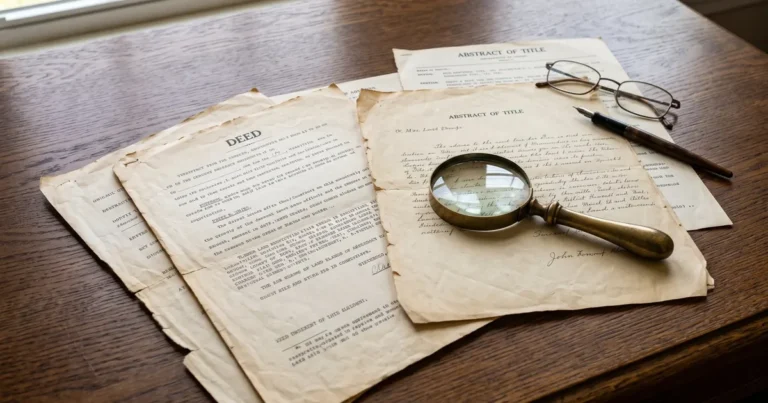
A large share of Oklahoma minerals belongs to heirs of the original owners, many of whom live out of state. Operators will not pay, and buyers will not close, until title is in your name. Every lease, pooling election, and sale in this guide depends on it.
How you fix title depends on the estate. A full probate may be required, and our Oklahoma probate timeline explains how long that takes. Smaller estates may qualify for a small estate affidavit. If the owner lived in another state, Oklahoma minerals usually require an ancillary proceeding here. Our guide to inheriting oil and gas rights walks through each path.
If you are the current owner, plan so your heirs do not face the same problem. A revocable trust or a family LLC can hold minerals outside probate and keep the interest from splintering among grandchildren. Under HB 1371, that planning also protects interest your family would otherwise lose while an estate is pending.
A Mineral Owner’s Action Plan
- Inventory what you own. List every county, section, and net mineral acre, with the recorded deeds or probate orders that support it.
- Pull 12 to 24 months of check stubs. Confirm each decimal and compare realized prices with the benchmark.
- Check the Commission’s records. Look for new permits, spacing, and pooling applications in your sections.
- Calendar any pooling order the day it arrives. Twenty days goes quickly.
- Get an independent valuation before responding to any purchase offer.
- Negotiate every lease. Never sign the operator’s form as written.
- Run the tax numbers for leasing, holding, and selling with your CPA.
- Fix title and update addresses with every operator before November 1.
Most of these steps take an afternoon. The mistakes they prevent can cost a family its minerals. Our oil and gas practice handles lease review, pooling elections, and title curative work for Oklahoma owners.
🚀 Got a Lease Offer, Pooling Order, or Purchase Offer?
High prices create deadlines. Get independent advice before one passes.
We were business owners before we were attorneys, and we review mineral decisions the way an owner would: what you give up, what you keep, and what it costs you in taxes.
- Oil and gas lease review and negotiation
- Pooling order elections and deadline management
- Mineral deed review before any sale
- Title curative work and division order review
- Probate and heirship for inherited minerals
- Trust and LLC planning for family mineral holdings
Licensed in Oklahoma, Colorado, and Wyoming • Attorneys who have run businesses
Frequently Asked Questions
-
Should I sell my mineral rights while oil is above $90?
Not automatically. Buyers price offers off trailing income and the forward curve, which points lower, so offers do not reflect spot prices. Selling makes sense when you need liquidity, the interest is small, or an offer beats an independent valuation.
-
How long do I have to respond to a pooling order in Oklahoma?
You generally have 20 calendar days from the date of the order to deliver a written election. The order itself states the deadline and the address for delivery.
-
What happens if I ignore a pooling order?
You are deemed to have elected the option with the smallest royalty and the largest cash bonus. That default is rarely the best choice for an owner who plans to hold long term.
-
Is a higher bonus or a higher royalty better?
It depends on the size of your interest, the expected well, and whether more wells are likely. For small interests, the extra royalty can take years to overtake a larger bonus. For larger interests or active units, royalty often wins.
-
How are mineral rights purchase offers calculated?
Buyers commonly start at 36 to 60 months of trailing royalty income for producing minerals, add value for undeveloped potential, and apply a commodity discount of 20% to 40%.
-
Do I pay capital gains tax when I sell mineral rights?
Generally yes, on the difference between the sale price and your basis if you held the minerals more than a year. Inherited minerals usually receive a stepped up basis, and a 1031 exchange may defer the gain.
-
When does Oklahoma’s new royalty payment law take effect?
HB 1371 takes effect November 1, 2026. It changes late payment interest to 15% simple, pauses interest during certain delays, and creates a state Mineral Owner Fund for proceeds unpaid after 36 months.
-
Why are my royalties in suspense?
The most common causes are title defects, an unprobated estate, missing paperwork, or an outdated address. Contact the operator’s owner relations department to find out what it needs.
-
Do I have to sign a division order?
Operators typically require one before paying. Signing a division order that shows the correct decimal is routine. Do not sign one that changes your decimal or your lease terms without an explanation.
-
Can I lease my minerals instead of selling them?
Yes. Leasing pays a bonus now and a royalty if a well produces, while you keep ownership and every future opportunity. For many owners, a well negotiated lease captures most of the benefit of high prices without a permanent sale.
Disclaimer: This article provides general information about Oklahoma mineral rights, pooling, leasing, and taxation and is not legal, tax, or financial advice. Oil prices, Commission rules, and tax law change frequently, and the right decision for any interest depends on its facts, including the lease, the unit, the operator, and your tax position. Consult a qualified attorney and CPA about your situation.
About Cantrell Law Firm: We are business attorneys who were business owners first. Licensed in Oklahoma, Colorado, and Wyoming, we represent Oklahoma mineral owners in lease negotiations, pooling elections, title curative work, and estate planning for family mineral holdings. Contact Cantrell Law Firm to discuss your minerals.