

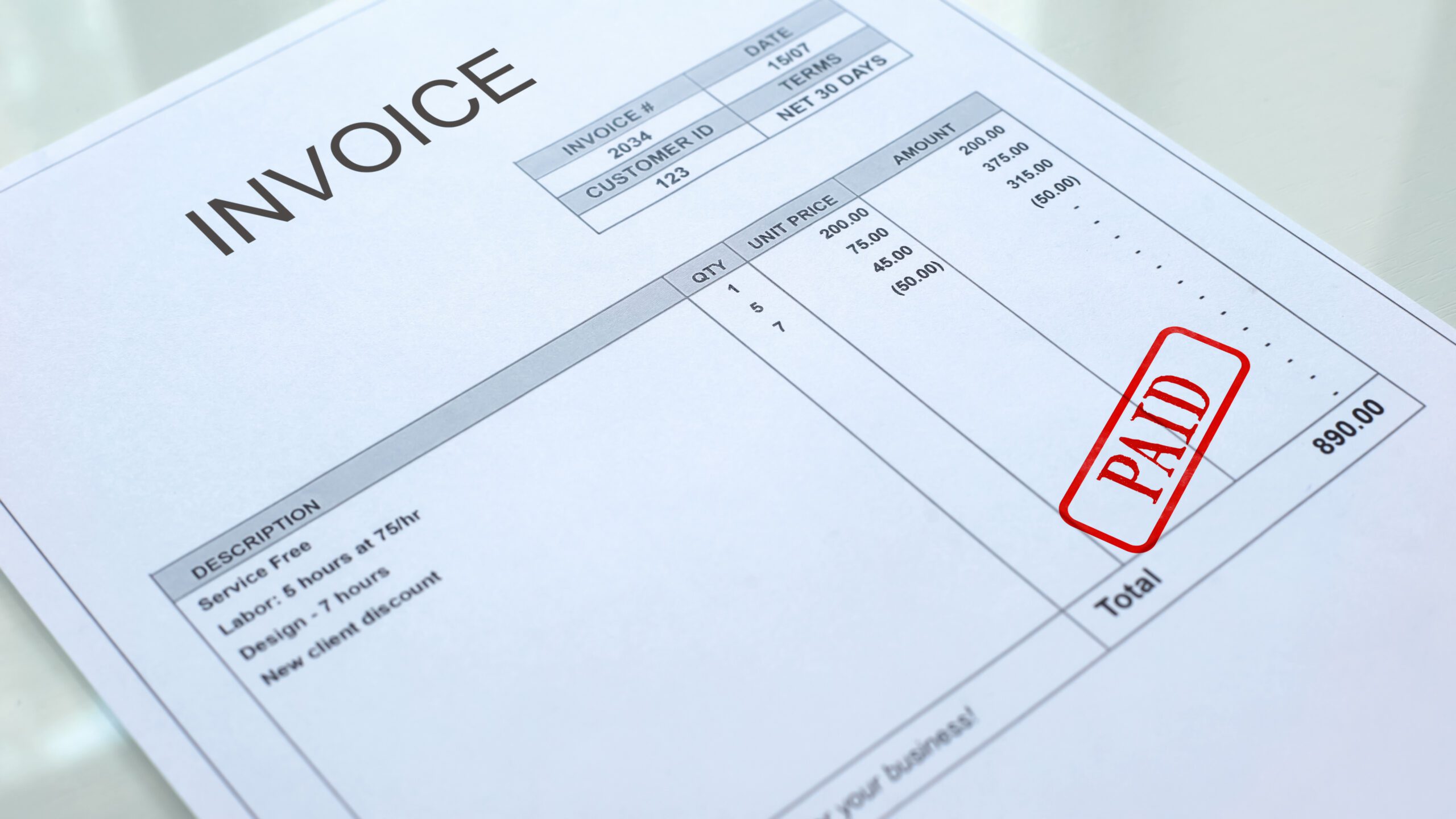
How to Secure Future Customer Payments
UCC Filings, Purchase Money Priority, and the Oklahoma Receivables Rule
Published July 30, 2026 | Reading Time: 15 minutes
Every business that invoices on terms is a lender. Most of them do not think of it that way, and that is exactly the problem.
When you ship equipment on net 30, complete a job and bill at the end of the month, or deliver materials before payment clears, you have extended credit. You just did it without a loan agreement, without collateral, and usually without checking whether someone else already has a claim on everything your customer owns. If that customer files bankruptcy or simply stops paying, you find out where you stand in line. For most companies, the answer is dead last.
We ran businesses before we practiced law, so we know the specific sting of a six figure invoice going bad on a customer we trusted. Being unsecured is almost never a decision anyone made. It is a decision nobody made. This guide covers how to secure what your customers owe you, and where Oklahoma does things differently than nearly every other state.
Table of Contents
- The Choice Most Businesses Never Made
- Attachment, Perfection, and Priority
- Getting the Security Agreement Right
- Filing the UCC-1 and Keeping It Alive
- Purchase Money Priority: Jumping the Line
- Search Before You Ship
- Enforcing Without Wrecking Your Claim
- Layering Other Protections
- Oklahoma-Specific Considerations
- Your Receivables Audit Checklist
- When to Get Legal Help
The Choice Most Businesses Never Made
Ask a business owner whether they would lend a customer $150,000 with no collateral and no personal guarantee, and almost every one says no. Then look at their accounts receivable aging report. There is frequently a customer sitting past 90 days at exactly that number.
The difference is framing. A loan feels like a credit decision. An invoice feels like a sale. Legally they are much closer than they feel, and when a customer becomes insolvent the distinction disappears. Unsecured trade creditors sit behind secured lenders and tax authorities, and often recover pennies or nothing.
The fix is old, cheap, and standardized. Article 9 of the Uniform Commercial Code governs security interests in personal property and has been adopted in every state. A UCC-1 financing statement is the public filing that puts the world on notice of your claim and establishes your priority against other creditors. Filing one costs less than a decent lunch.
💡 The Entrepreneur’s Take
Nobody sets out to be an unsecured creditor. It happens because securing a receivable requires a conversation with the customer at the exact moment you are trying to win their business. That conversation is uncomfortable for about four minutes. Collecting on an unsecured six figure invoice is uncomfortable for about eighteen months. Have the short conversation.Attachment, Perfection, and Priority
Three concepts do all the work in secured transactions. Getting them straight prevents most of the expensive mistakes.
Attachment is when your security interest becomes enforceable against the customer. It requires three things: you gave value, meaning you shipped the goods or performed the work; the customer has rights in the collateral; and the customer authenticated a security agreement describing that collateral. Without attachment, you have nothing, no matter what you filed.
Perfection is what makes your interest effective against the rest of the world, meaning other creditors and a bankruptcy trustee. For most business collateral, including accounts receivable, inventory, and equipment, perfection happens by filing a UCC-1. A few collateral types require possession or control instead of filing, deposit accounts being the common example.
Priority determines who gets paid first when several creditors claim the same collateral. The general rule is first to file or perfect wins, which is precisely why a filing you make today does not help against a lender who filed two years ago. There is one major exception that can jump you to the front, covered further below.
The practical takeaway is that these are sequential and independent. A beautifully drafted security agreement with no filing leaves you unperfected. A filing with no signed security agreement leaves you unattached. You need both.
Getting the Security Agreement Right
The security agreement is the contract between you and your customer that creates the interest. In practice it is often built into credit application paperwork or terms and conditions, which is fine, as long as the language actually does the job.
The customer must authenticate it. A signature, electronic or physical, on a document that grants a security interest. Terms buried on the back of an invoice sent after delivery generally do not qualify, because the customer never agreed to them at the time credit was extended.
The collateral description has to be adequate. The standard is that the description must reasonably identify what is covered. This is where a subtle and important asymmetry lives: your financing statement may use a broad indication of collateral, including a general statement covering all assets, but the security agreement itself cannot rely on that same catch all language. A security agreement that describes collateral only as “all the debtor’s assets” risks being held insufficient. Describe categories: accounts, inventory, equipment, general intangibles, and proceeds.
Include proceeds and after acquired property. If your customer sells the inventory you financed, you want your interest to follow the sale proceeds. If they acquire new equipment, you may want that covered too. These need to be stated.
⚠️ The Mismatch That Voids Your Interest
Your security agreement and your financing statement describe collateral for different audiences and under different standards. The agreement binds your customer, so it needs specificity. The filing notifies other creditors, so it can be broader. Copying one into the other in either direction is a common and costly error. If the agreement is narrower than you believed, your collateral is narrower than you believed.Filing the UCC-1 and Keeping It Alive
The financing statement itself is a short form. Three pieces of information carry nearly all of the risk.
The debtor’s name must be exact. This kills more filings than every other error combined. For a registered organization such as a corporation or LLC, the name must match the public organic record filed with the state of organization, character for character. Not the trade name, not the name on the purchase order, not a shortened version. “Smith Construction, L.L.C.” and “Smith Construction LLC” can be treated as different entities by a search system, and a filing that a standard search will not surface may be ineffective.
You must file in the right place. Filing follows the debtor’s location, and for registered organizations the debtor is located in its state of organization. A Delaware LLC operating exclusively in Tulsa is a Delaware debtor for filing purposes. Getting this wrong means filing in a state where nobody will find your notice.
The collateral indication must reasonably identify the collateral, and here a broad description is permitted, including an all assets indication.
The Five Year Clock
A UCC-1 is effective for five years from the filing date. To keep it alive you file a continuation statement, and the window for doing so is narrow: only during the six months before the filing expires. File early and it is rejected. File late and the original lapsed, which means your perfection is treated as never having existed against purchasers and other creditors. A lapsed filing does not merely stop protecting you going forward. It can retroactively unwind your priority.
For a company with dozens of filings on staggered dates, this is a calendar problem, not a legal one. Whoever owns your receivables should own that calendar.
On the other end, once a customer pays in full they are entitled to a release, filed as a UCC-3 termination statement. Handle these promptly. A stale filing against a customer who has paid creates friction with their other lenders and gives them a legitimate grievance against you.
Purchase Money Priority: Jumping the Line
Here is the most valuable section of this guide for anyone who sells goods or equipment.
The ordinary rule is first to file wins. That seems to doom any seller whose customer already granted a bank a blanket lien on all assets, which is most established businesses. The purchase money security interest, or PMSI, is the exception that solves this. A PMSI arises when a creditor finances the acquisition of specific goods and takes a security interest in those same goods. Done correctly, it beats an earlier filed blanket lien as to that collateral.
The catch is that the requirements are strict and differ sharply depending on whether the goods are equipment or inventory in your customer’s hands.
Equipment and Other Non Inventory Goods
For goods your customer will use rather than resell, the rule is comparatively forgiving. The PMSI must be perfected before the customer receives possession or within 20 days after. There is no notification requirement. Miss the 20 days and you keep a security interest, but you lose the special priority and fall in behind the blanket lender.
Practitioners consistently advise perfecting immediately rather than using the full grace period, because a bankruptcy filing during that window can leave the interest exposed to avoidance by the trustee.
Inventory
If your customer holds the goods for resale, the requirements tighten considerably. The PMSI in inventory must be perfected before the customer receives possession, with no 20 day window at all. On top of that, you must send authenticated notification to any holder of a conflicting security interest who filed earlier, and that notification must be received before the customer takes possession. The notice must state that you have or expect to acquire a purchase money interest and must describe the inventory.
📊 Equipment PMSI vs. Inventory PMSI
- Equipment: perfect before possession or within 20 days after; no notice to other creditors required
- Inventory: perfect strictly before possession; written notice must be received by earlier filed secured parties beforehand; notice must describe the inventory
- Characterization is not about the goods: the same tractor is inventory in a dealer’s hands and equipment in a farmer’s hands
- Ongoing deliveries: once properly set up, later shipments in a restocking relationship can fall within the purchase money arrangement
That characterization point deserves emphasis because it is where sellers guess wrong. You do not classify the goods by what you sell. You classify by what your customer does with them. Selling identical machines to a rental company and to an end user can put you under two different rule sets on the same day.
Search Before You Ship
Perfecting an interest is only half of a credit decision. The other half is knowing what you are walking into.
Before extending meaningful credit, run a UCC search against the customer’s exact legal name in its state of organization. You are looking for one thing: does a bank, an SBA lender, a factor, or an equipment lender already hold a blanket lien on substantially all assets? Blanket liens are standard practice for banks making term loans and lines of credit, so finding one is normal rather than alarming. What matters is what you do next:
- If your collateral is already encumbered, a plain security interest gives you little. Consider whether a purchase money structure applies instead.
- If you need priority in encumbered collateral, you are negotiating subordination with the existing lender. Sometimes achievable, never automatic.
- If the customer is heavily encumbered across the board, that is credit information. Shorten terms, require deposits, or price the risk.
Understand the flip side too, because customers will raise it: filing against them can affect their ability to borrow elsewhere. A lien limited to specific collateral rather than all assets preserves their remaining borrowing capacity, and offering that narrower filing is often what gets a reluctant customer to sign.
Enforcing Without Wrecking Your Claim
A perfected security interest is worth exactly as much as your willingness to enforce it correctly. Article 9 gives a secured party real remedies, including repossession and disposition of the collateral, and it attaches real conditions to them.
Two requirements drive the outcome. Every aspect of a disposition must be commercially reasonable, covering the method, manner, time, place, and terms of sale. And you must send proper authenticated notice of the disposition to the debtor and to other parties entitled to it, within a reasonable time before the sale.
Skipping these is not a technicality. A secured creditor who fails to comply faces a rebuttable presumption that the collateral would have produced proceeds equal to the entire secured obligation plus costs. In practical terms, a sloppy repossession sale can extinguish your right to collect the deficiency, which is usually the balance you actually cared about.
⚠️ Self Help Has Limits
Article 9 permits repossession without going to court, but only if it happens without a breach of the peace. There is no bright line defining that phrase, and courts read it broadly against creditors. Cutting a lock, entering a closed building, or proceeding over a customer’s objection can convert a lawful repossession into liability running the other direction. When there is any resistance, stop and use the judicial process.One tax note worth knowing before you write anything off. If a receivable truly becomes uncollectible, a business bad debt deduction may be available, but generally only if you previously included the amount in income. Accrual method businesses usually can. Cash method businesses generally cannot, because the income was never reported in the first place.
Layering Other Protections
A security interest is the backbone, not the whole skeleton. The strongest credit programs stack several tools.
Personal guarantees. If the customer is a closely held company, a guarantee from the owner changes the collection dynamic entirely. It is a separate agreement, not something your UCC filing accomplishes.
Credit applications that actually matter. Collect the exact legal name, state of organization, ownership, trade references, and the grant of a security interest, all in one signed document at account opening.
Deposits and progress billing. The simplest protection is not being owed the money. For project work, milestone billing beats a single invoice at completion. For concentrated exposure to one large customer, letters of credit or credit insurance can shift the risk for less than it costs to carry it.
Factoring. Selling receivables converts them to cash immediately, at a discount. Factors file their own UCC-1 against your receivables, so understand that you are granting a lien on the same asset this article is about protecting.
Mechanic’s and materialman’s liens. For construction and improvement work, statutory lien rights against the property may be far more powerful than a UCC filing, with strict notice and deadline requirements of their own.
Oklahoma-Specific Considerations
Oklahoma runs its UCC system differently from nearly every other state, and businesses that assume the standard model file in the wrong place.
In most states, financing statements go to the Secretary of State. In Oklahoma, they do not. The Oklahoma County Clerk serves as the centralized and exclusive UCC filing office for the entire state. A creditor perfecting against a debtor organized in Woodward, Lawton, or Idabel files in Oklahoma City. Searches run through the same office, and the Clerk maintains an online portal for filing and for searching UCC-1 financing statements and federal tax liens.
This centralization is genuinely convenient once you know about it, and a persistent source of error for out of state counsel and national credit departments who default to a Secretary of State filing. If your credit team uses a national filing service, confirm that Oklahoma is mapped correctly.
Two further notes. Certain collateral tied to real property, including fixtures and interests connected to mineral production, follows different filing rules, which is why security interests in oil and gas assets deserve their own analysis. We cover that separately in our guide to security interests in oil and gas. And for teams building an internal process, the Oklahoma Cooperative Extension Service publishes a detailed handbook covering county clerk UCC duties, forms, and fees.
🧭 Why This Matters More in Oklahoma Right Now
Oklahoma’s economy runs heavily on sectors that extend trade credit by default: energy services, manufacturing, agriculture, construction, and equipment distribution. These are businesses that ship material and mobilize crews before they get paid, often on handshake terms with long standing customers. That is precisely the profile that carries large unsecured exposure without noticing. If a downturn hits a customer concentration, the companies that filed are the ones that recover.Finally, if collection does end up in litigation, the terms in your credit application and invoices shape where and how that happens. A forum clause naming your home county and a clear interest and collection cost provision both improve the economics of turning an unpaid account into a collectible judgment.
Your Receivables Audit Checklist
Run this against your current credit process. Most companies find two or three gaps immediately.
✅ Secured Receivables Audit
- Pull your aging report and identify every customer above a threshold that would genuinely hurt to lose
- Confirm your credit application includes a signed grant of a security interest
- Verify the collateral description in your security agreement lists categories rather than relying on an all assets phrase
- Capture each customer’s exact legal name and state of organization at account opening, not from the purchase order
- Run UCC searches on major customers before extending or increasing credit
- File financing statements in the correct jurisdiction, and remember Oklahoma files with the Oklahoma County Clerk
- Calendar every filing’s five year expiration with a reminder inside the six month continuation window
- Determine whether your goods are equipment or inventory in each customer’s hands, then follow the matching purchase money rules
- Build the inventory PMSI notice into your onboarding process for resale customers
- Collect personal guarantees from closely held customers
- File UCC-3 terminations promptly when customers pay in full
- Confirm whoever owns collections knows the notice and commercial reasonableness rules before any repossession
When to Get Legal Help
Plenty of this is process work your team can own. Filing a financing statement does not require a lawyer, and calendaring continuations is administrative.
Bring in counsel when the stakes rise: drafting the security agreement language inside your standard credit application, setting up a purchase money program for inventory customers where the notice mechanics are unforgiving, negotiating subordination with a customer’s bank, or responding to a default where a misstep can cost you the deficiency.
The pattern we see most often is a company that extends credit successfully for years, gets burned once, and only then builds a program. The program costs about the same either way. The only difference is whether you pay for it before or after the loss. Structuring your commercial agreements to allocate this risk up front belongs in the same conversation as your broader corporate strategy and planning.
🛡️ Stop Shipping on Unsecured Credit
If a major customer stopped paying tomorrow, where would you stand in line?
Our Oklahoma business attorneys are former entrepreneurs who have carried receivables and chased them. We help companies build credit programs that actually secure the money they are owed, without making every sale harder to close.
- Credit application and security agreement drafting
- UCC filing strategy and purchase money programs
- Lien searches and subordination negotiation
- Customer default, workout, and enforcement counsel
- Commercial contract and risk allocation review
Free initial consultation • Prompt response • Oklahoma business attorneys
Frequently Asked Questions
-
Do I really need a security interest to get paid by customers?
Not for customers who pay. It matters when one does not. Without a perfected security interest you stand behind secured lenders and tax authorities and frequently recover very little in an insolvency. The real question is whether your exposure to any single customer is large enough that recovering nothing would hurt.
Where do I file a UCC-1 for an Oklahoma customer?
With the Oklahoma County Clerk, which serves as the centralized and exclusive UCC filing office for the entire state. This surprises people, because most states use the Secretary of State. Note that filing location follows the debtor’s state of organization, so a Delaware entity operating in Oklahoma is filed in Delaware.
What is the single most common filing mistake?
Getting the debtor’s name wrong. For a registered organization the name must match the public organic record on file in its state of organization exactly. Using a trade name, a shortened version, or the name printed on a purchase order can produce a filing that standard searches will not surface, which can render it ineffective.
How long does a UCC filing last?
Five years from the filing date. To extend it you file a continuation statement, and it can only be filed during the six months before expiration. File outside that window and it is rejected, and if the original lapses your perfection is treated as never having existed against other creditors and purchasers.
My customer’s bank already has a lien on everything. Can I still get priority?
Potentially, through a purchase money security interest in the specific goods you are financing. A properly perfected PMSI can take priority over an earlier filed blanket lien as to that collateral. The requirements are strict and depend on whether the goods are equipment or inventory in your customer’s hands.
What is the difference between an equipment PMSI and an inventory PMSI?
For equipment, you must perfect before the customer takes possession or within 20 days after, with no notice to other creditors required. For inventory, you must perfect strictly before possession with no grace period, and you must also send notice that is received by earlier filed secured parties before possession. Inventory is meaningfully harder.
How do I know whether my goods are equipment or inventory?
It depends on what your customer does with them, not what you sell. Goods held for resale are inventory; goods the customer uses in operations are equipment. The same machine can be either depending on the buyer, so classify per customer rather than per product line.
Will filing against a customer damage my relationship with them?
It can create friction, mostly because a blanket lien limits their ability to borrow elsewhere. Offering a filing limited to the specific goods you supply rather than all assets preserves their remaining borrowing capacity and is frequently what makes the conversation easy. Handling terminations promptly once they pay also helps considerably.
Can I repossess collateral myself if a customer defaults?
Article 9 permits repossession without a court order, but only without a breach of the peace, and courts read that limitation broadly against creditors. Any resistance, forced entry, or confrontation can turn a lawful repossession into liability. When there is objection, stop and use the judicial process.
Can I deduct a receivable that I cannot collect?
Possibly, as a business bad debt, but generally only if you previously included the amount in income. Accrual method businesses typically can, since they reported the revenue when billed. Cash method businesses generally cannot, because the income was never reported. Document your collection efforts either way, and confirm treatment with your tax advisor.
Disclaimer: This article provides general information about secured transactions and receivables and should not be considered legal advice. Article 9 requirements are technical, vary in application by state, and turn heavily on specific facts including entity names, collateral type, and filing timing. Rules, forms, and fees may change after publication. For guidance on your credit program or a specific customer default, consult qualified business counsel licensed in the applicable state.
About Cantrell Law Firm: We are Oklahoma business attorneys and former entrepreneurs who help companies structure contracts, secure what they are owed, and manage risk as they grow. Our practical approach combines real operating experience with strategic legal planning. Contact us to discuss your commercial transaction and receivables needs.