

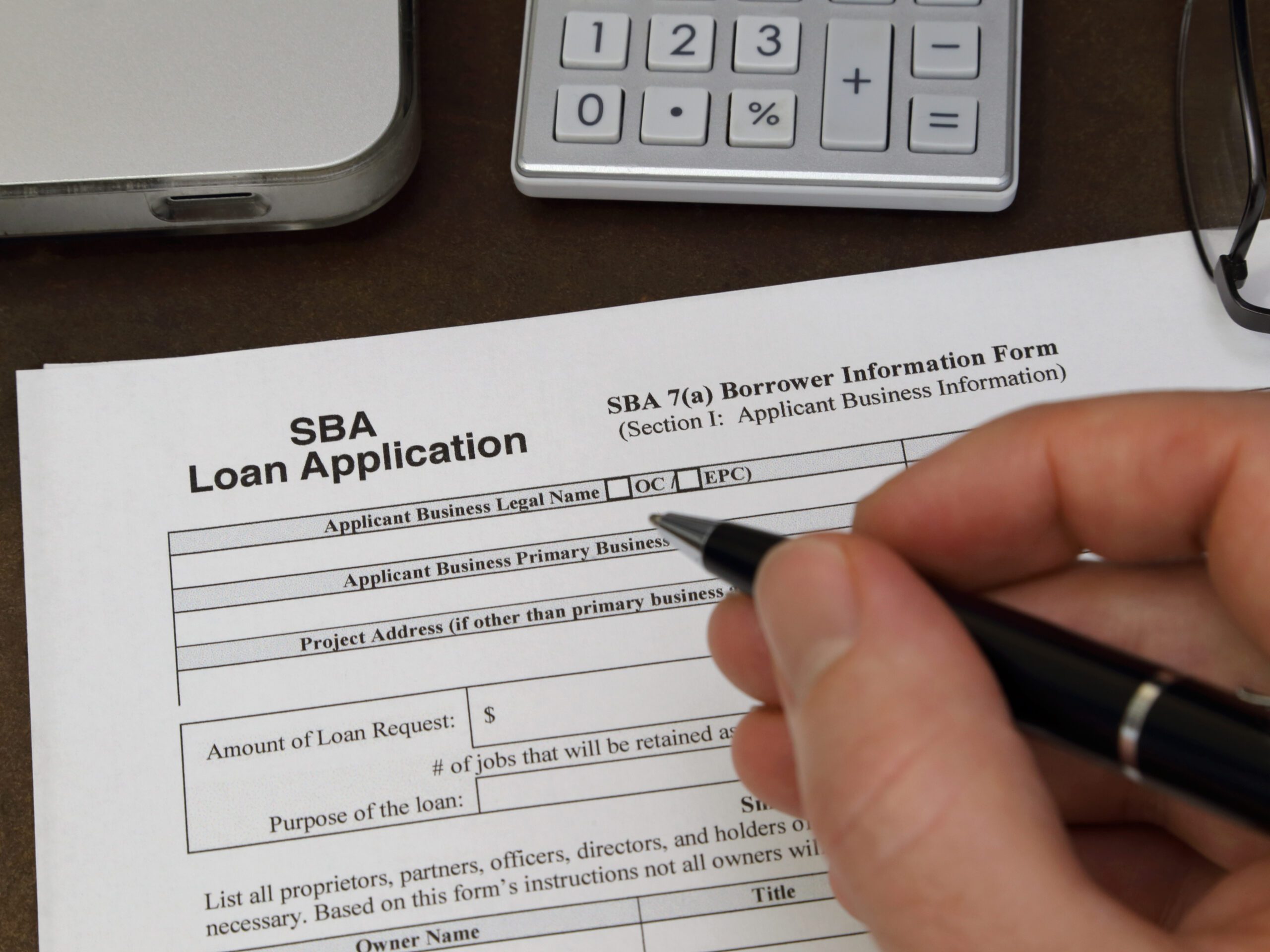
SBA 7(a) Loans:
The Complete Guide
for Business Owners
How to Use the SBA’s Most Popular Loan Program in 2026
Updated September 25, 2026 | Reading Time: 19 minutes
Access to capital is the single biggest obstacle between where most small businesses are and where their owners want them to be. Hiring, equipment, real estate, an acquisition, or a slow season all take money most owners do not have sitting in the bank. For many of them, the Small Business Administration’s 7(a) loan program is how that gap gets closed.
The 7(a) program is the federal government’s primary vehicle for small business financing. The SBA does not lend the money. It guarantees a large share of loans made by private lenders, which lets banks extend credit to businesses that would fall short of conventional underwriting.
The program also changed more in 2026 than in any year in recent memory. Ownership eligibility narrowed in March. Acquisition lending is rewritten for loans numbered from October 1. And Oklahoma’s energy sector got a 90% guarantee program of its own. This guide covers how 7(a) loans work today, what changed, and how to position your business to get approved.
Table of Contents
- How the 7(a) Program Works
- What Changed in 2026
- Types of 7(a) Loans
- Eligibility Requirements
- Loan Terms, Rates, and Fees
- Collateral and Personal Guarantees
- Uses of Proceeds, Including Acquisitions
- The Application Process
- Oklahoma Considerations for 7(a) Borrowers
- Getting Approved and Comparing Alternatives
How the 7(a) Program Works
A business owner applies to an SBA approved lender: a commercial bank, a credit union, or a specialized non bank lender. The lender underwrites the loan against its own standards and the SBA’s program rules. If the loan is approved, the SBA guarantees a percentage of it, generally 85% for loans of $150,000 or less and 75% for larger loans. If the borrower defaults, the SBA covers the guaranteed share of the lender’s loss.
That guarantee is what makes the program work. Lenders approve borrowers they would otherwise decline. Borrowers get longer repayment terms, smaller down payments, and interest rates capped by the SBA. The tradeoff is paperwork, fees, and personal guarantees, all covered below.
💡 Why Your Choice of Lender Matters
Most lenders submit loans to the SBA for review. Lenders designated as Preferred Lenders can approve loans under delegated authority without waiting on the agency. Borrowing from a Preferred Lender with real SBA volume can cut weeks from the timeline, and experienced SBA lenders are far better at spotting eligibility problems early.What Changed in 2026
If you last looked at SBA financing a year or two ago, several rules you may remember no longer apply.
Ownership eligibility narrowed. Effective March 1, 2026, SBA loans are limited to businesses owned by U.S. citizens or U.S. nationals whose principal residence is in the United States. Lawful permanent residents are no longer eligible, and the restriction reaches direct and indirect owners.
Acquisition lending is rewritten. SBA SOP 50 10 8.1 applies to loans numbered on or after October 1, 2026. For business purchases, every deal now requires an independent valuation, coverage must be met on historical earnings rather than projections, deals of $3 million and up require a quality of earnings report, and seller notes plus outside investor money can supply no more than half of the buyer’s required equity injection. The lender association NAGGL summarizes the full update.
Small loans lost credit scoring. The SBA sunset its reliance on the SBSS credit score for loans of $350,000 or less, replacing it with a repayment analysis that includes recent bank statements. Business purchases no longer qualify for the streamlined small loan path at all.
Energy businesses got a higher guarantee. On August 14, 2026, the SBA announced a 90% Energy Guarantee through its International Trade Loan program, covering businesses across the energy supply chain, including oil and gas extraction and drilling support.
⚠️ Buying or Selling a Business? Read This First
The October 1 acquisition changes affect price, down payment, seller financing, and timelines for nearly every SBA financed business sale. We break them down in detail in our guide to the new SBA acquisition rules under SOP 50 10 8.1, including what sellers should do before listing.Types of 7(a) Loans
The 7(a) umbrella covers several products. The right one depends on how much you need and what the money is for.
Standard 7(a) loans cover amounts above $350,000 up to $5 million and fund nearly any legitimate business purpose: real estate, acquisitions, equipment, refinancing, and working capital.
7(a) Small Loans cover $350,000 or less. They carry somewhat different collateral and documentation rules, though as noted above they are no longer a shortcut for business purchases.
SBA Express loans go up to $500,000 with faster turnaround, because lenders make the credit decision themselves. The guarantee is only 50%, so lenders are pickier about who qualifies. The 2026 update added flexibility to extend or reissue Express lines when the original terms prove too tight.
CAPLines are revolving lines for working capital, seasonal needs, contract performance, and builders. The Working Capital Pilot offers asset based lines up to $5 million, and the newer Manufacturers’ Access to Revolving Credit program extends similar revolving options to manufacturers.
Export and trade loans include Export Express, Export Working Capital, and the International Trade Loan, which now carries the 90% energy guarantee for eligible businesses.
✅ Matching the Product to the Need
• Buying real estate, a business, or major equipment: Standard 7(a), or compare SBA 504• Under $500,000 and speed matters: SBA Express
• Recurring or seasonal working capital: CAPLines or the Working Capital Pilot
• Export growth or import competition: International Trade Loan or Export Working Capital
• Energy supply chain business: ask about the International Trade Loan energy guarantee
Eligibility Requirements
Eligibility comes before credit. A strong business that fails an eligibility test cannot get an SBA loan at any price, so check these first.
Size and structure. The business must meet the SBA’s size standards for its industry, measured by employees or average annual receipts. It must be a for profit business located and operating in the United States, with owners who have invested equity.
Credit elsewhere. The borrower must be unable to obtain the financing on reasonable terms from non federal sources. You do not need a formal bank rejection, but the SBA program must offer something conventional credit will not.
Ownership and citizenship. As of March 1, 2026, every direct and indirect owner must be a U.S. citizen or U.S. national with a principal residence in the United States.
Ineligible businesses. Passive investment companies, lenders, life insurance companies, pyramid sales operations, businesses primarily engaged in lobbying, and businesses engaged in illegal activity are excluded. SBA regulations also bar speculative businesses, citing oil wildcatting as the example.
Criminal history. Since a 2024 SBA rule change, a business is ineligible only if a covered owner or officer is currently incarcerated or under indictment for a felony or a crime of financial misconduct or false statement. Prior convictions and probation or parole are no longer automatic disqualifiers, though they still must be disclosed.
📋 Eligibility Check Before You Apply
• Does the business meet the size standard for its industry?• Is every owner a U.S. citizen or national living in the United States?
• Is the business outside the SBA’s list of ineligible business types?
• Is any 20% owner currently incarcerated or under indictment?
• Are the owners current on all federal debt, including taxes and prior government loans?
• Can you show why conventional financing is not available on reasonable terms?
Loan Terms, Rates, and Fees
Loan Amounts and Maturities
The maximum 7(a) loan is $5 million, and the SBA’s maximum guarantee exposure to one business and its affiliates is generally $3.75 million, or $4.5 million for certain export and trade loans. Maturities depend on use:
- Working capital and most business purposes: up to 10 years
- Equipment: up to 10 years, or longer if the equipment’s useful life supports it
- Real estate: up to 25 years, plus time for construction
- Mixed purpose loans: a blended term, or up to 25 years if at least 51% is real estate
For businesses in leased space, the loan term generally cannot exceed the remaining lease term plus renewal options you control. Most 7(a) loans fully amortize with no balloon, and variable rate loans re amortize as the base rate moves.
Interest Rate Caps
Rates are negotiated but capped by the SBA. Variable rates are usually pegged to the prime rate. As of September 2026, NerdWallet reports prime at 7%, and the maximum variable spreads are:
- Over $350,000: prime plus 3%
- $250,001 to $350,000: prime plus 4.5%
- $50,001 to $250,000: prime plus 6%
- $50,000 or less: prime plus 6.5%
Fixed rate loans carry their own, somewhat higher caps. Strong borrowers can often negotiate below the maximum spread.
Guarantee Fees
Borrowers pay an upfront guarantee fee calculated on the guaranteed portion of the loan, not the full loan amount. For fiscal year 2026, which runs through September 30, 2026, Lendio reports the schedule for loans over 12 months was 2% on loans of $150,000 or less, 3% on loans from $150,001 to $700,000, and 3.5% to 3.75% on larger loans depending on the guaranteed amount. The SBA resets fees every October 1, so confirm the current year’s schedule with your lender. Lenders may also charge packaging and closing fees within SBA limits.
Prepayment
Loans with maturities of 15 years or more carry a prepayment fee if you voluntarily prepay 25% or more of the balance in the first three years: 5% in year one, 3% in year two, and 1% in year three. Shorter loans carry no SBA prepayment fee, though your lender’s documents should still be read closely.
Collateral and Personal Guarantees
Collateral
Lenders must take available collateral to the extent they would on a comparable conventional loan, starting with business assets and moving to personal assets if needed. For loans of $50,000 or less, lenders are not required to take collateral. A loan that is otherwise creditworthy should not be declined solely for lack of collateral; that is precisely the gap the guarantee exists to fill.
Personal Guarantees
This is the term most owners underestimate. Every owner of 20% or more must personally guarantee the loan. If no one holds 20%, at least one owner must still guarantee. Spouses may be required to guarantee when combined household ownership crosses 20%, and an owner cannot dodge the requirement by trimming their stake shortly before applying unless they exit entirely.
The 2026 update also tightened rules for trusts: per NAGGL’s summary, a trust that owns any part of the borrower must guarantee, and the trustor must personally guarantee whether the trust is revocable or irrevocable. If your ownership runs through an estate planning trust, raise it with the lender early.
⚠️ What a Personal Guarantee Really Means
An unlimited personal guarantee puts your savings, investments, and often your home behind the business debt. The SBA’s guarantee protects the lender, not you. If the business fails and collateral falls short, the lender and then the SBA can pursue guarantors personally. Understand exactly what you are signing, and whether your entity structure and estate plan leave you exposed.Uses of Proceeds, Including Acquisitions
7(a) proceeds can fund an unusually wide range of needs: buying a business or a partner’s interest, owner occupied commercial real estate, equipment, working capital, construction, leasehold improvements, refinancing existing business debt, and franchise startup or resale costs. The SBA’s terms and conditions page lists the details. Proceeds cannot fund passive real estate investment, distributions to owners beyond reasonable compensation, or delinquent federal debt.
Business Acquisitions After October 1
Acquisitions remain one of the most common uses of the program. What changed is how they are underwritten. Under SOP 50 10 8.1, the SBA sorts purchases into four categories: initial acquisitions, business expansions, owner buyouts, and ESOP or cooperative transactions. Initial acquisitions and owner buyouts must show at least 1.25x debt service coverage on historical earnings; expansions must show 1.15x. Every deal gets an independent valuation, and the lender cannot finance any part of the price the valuation does not support.
The minimum 10% equity injection is mandatory for initial acquisitions. A seller note can count toward it only if it is on full standby for the life of the loan, and seller standby debt plus outside investor equity can cover no more than half the injection. Earnouts remain prohibited, while sellers may now stay on as consultants for up to 24 months. For the full picture from both sides of the table, see our guide to the new SBA acquisition rules and our overview of due diligence in private M&A.
The Application Process
1. Find the right lender. The SBA’s Lender Match tool connects borrowers with active SBA lenders. Ask how many 7(a) loans the lender closed last year and whether it holds Preferred Lender status.
2. Assemble the package. Expect to provide personal financial statements for 20% owners, three years of personal and business tax returns, current financial statements, a debt schedule, and documents specific to the loan purpose, such as a purchase agreement or equipment quote. Startups should add a business plan with projections. For acquisitions, historical financials now carry the load; projections can support the story but cannot satisfy the coverage test.
3. Complete the SBA forms. These include the SBA Form 1919, which covers ownership, citizenship, prior government financing, and background questions. Answer every question completely; inaccurate answers create problems long after closing.
4. Underwriting and approval. The lender evaluates credit, cash flow, collateral, and management. Non delegated lenders then submit to the SBA. Acquisitions add an independent valuation and, at $3 million and up, a quality of earnings report.
5. Commitment and closing. The lender issues a commitment letter, conditions are satisfied, and the loan closes. Real estate adds title, appraisal, and environmental review.
✅ Realistic Timelines
• SBA Express decision: often within days• Standard loan with a Preferred Lender and a complete package: roughly 30 to 60 days
• Loans requiring SBA review: add several weeks
• Business acquisitions after October 1: plan for 60 to 90 days or more, given valuation and diligence requirements
• Construction and complex real estate: 90 days or longer
Oklahoma Considerations for 7(a) Borrowers
Oklahoma’s economy runs on energy, agriculture, manufacturing, aerospace, construction, and a growing services sector, and each of those raises its own 7(a) questions. Our commercial transaction lawyers in Oklahoma City review loan commitments, guaranties and purchase documents before you sign.
Energy
Oilfield service and equipment companies generally qualify for 7(a) financing like any other business. Speculative ventures such as wildcatting do not, and lenders have historically been cautious with producers because of commodity risk. The August 2026 energy guarantee changes that math: a 90% guarantee through the International Trade Loan program, versus 75% on a standard larger 7(a) loan, for businesses across the energy production supply chain, including extraction, drilling, and support activities. The program carries its own statutory eligibility tests, so confirm fit with a lender, but for Oklahoma it is the most significant SBA development of the year. With rigs and oil prices up this fall, expect lenders to look hard at whether recent energy earnings are sustainable.
Agriculture
Farms and ranches are not categorically excluded, but many find USDA programs a better fit. Agricultural processing, storage, equipment dealerships, and ag technology businesses are common 7(a) borrowers. Rural borrowers should also compare the USDA option discussed below.
Acquisitions and Franchises
Oklahoma’s business sale market is concentrated in the range SBA financing serves: contractors, service companies, practices, and franchise locations worth a few hundred thousand to a few million dollars. Those deals are exactly where the October 1 changes bite, particularly the end of streamlined underwriting for small purchases. Franchise buyers should confirm the brand appears on the SBA Franchise Directory; our guide to buying a franchise in Oklahoma covers the rest.
🏢 Oklahoma Resources for SBA Borrowers
The SBA Oklahoma District Office in Oklahoma City can connect you with active local lenders. The Oklahoma Small Business Development Center network offers free help with business plans, projections, and loan packages through centers across the state. Before you apply, make sure your entity is in good standing with the Oklahoma Secretary of State and your operating agreement clearly authorizes the borrowing and guarantees.Getting Approved and Comparing Alternatives
What Moves the Needle
Clean credit, personal and business. Pull your reports a year before you apply, fix errors, and bring revolving balances down. With credit scoring gone for small loans, recent bank statements and cash flow carry more weight than ever.
Coverage on real numbers. Lenders measure debt service coverage, cash flow available for debt divided by annual debt payments. Acquisitions now require 1.15x to 1.25x on historical earnings, and most lenders want similar cushion on other loans. Financial statements that reconcile to your tax returns are the fastest way to earn credibility.
Real equity. Expect to put in at least 10% for startups and acquisitions, and more when the deal is tight. Under the new rules, at least half of the required injection for an acquisition must be your own cash.
The right entity and documents. Lenders look at who owns what, who can sign, and who must guarantee. Getting your entity structure right before you apply avoids delays at closing.
Alternatives Worth Comparing
SBA 504 loans finance owner occupied real estate and long lived equipment through a bank and a Certified Development Company, typically with 10% down and a long term fixed rate on the CDC portion. They do not fund goodwill or working capital, so they rarely fit a business purchase alone. See our SBA 504 guide.
Conventional loans can be cheaper for established businesses with strong balance sheets, since they avoid the guarantee fee, but they usually mean shorter terms and larger down payments.
USDA Business and Industry loans offer guarantees for rural businesses, with loan sizes well above the 7(a) cap, which can make them a better fit for larger projects outside Oklahoma’s metros.
Seller financing and investors can round out a deal, but for SBA financed acquisitions, both are now capped when used toward the equity injection.
🚀 Ready to Explore SBA Financing?
The loan is only as good as the deal and documents behind it.
We were business owners before we were business attorneys. We help Oklahoma owners structure transactions, review loan documents and guarantees, and get their entities ready before the lender asks.
- SBA loan document and personal guarantee review
- Business acquisition structuring and due diligence
- Entity formation and cleanup before you borrow
- Seller note and purchase agreement negotiation
- Ongoing business legal support after closing
Licensed in Oklahoma, Colorado, and Wyoming • Attorneys who have run businesses
Frequently Asked Questions
-
How long does it take to get an SBA 7(a) loan?
SBA Express decisions can come within days. Standard loans with a Preferred Lender and a complete package often close in 30 to 60 days. Business acquisitions under the October 2026 rules commonly take 60 to 90 days or more because of valuation and diligence requirements.
Can a startup qualify for an SBA 7(a) loan?
Yes, though startups face more scrutiny. Lenders focus on the owner’s credit, industry experience, the business plan and projections, and an equity injection of at least 10%.
Can green card holders still get SBA loans?
No. Since March 1, 2026, SBA loans require every direct and indirect owner to be a U.S. citizen or U.S. national with a principal residence in the United States. Lawful permanent residents are no longer eligible.
What credit score do I need?
The SBA does not set one universal minimum, and it no longer relies on the SBSS score for small loans. Most lenders look for personal scores in the high 600s or better, alongside cash flow, bank statements, and collateral.
Can I use a 7(a) loan to buy an existing business?
Yes, it remains one of the most common uses. For loans numbered on or after October 1, 2026, acquisitions require an independent valuation, coverage on historical earnings, and at least 10% equity, with no more than half of that from seller notes or outside investors.
Do I have to personally guarantee the loan?
If you own 20% or more, yes. If no one owns 20%, at least one owner must guarantee. Trusts that own part of the borrower and their trustors may also need to guarantee under the 2026 update.
Can I pay off a 7(a) loan early?
Yes. Loans with maturities of 15 years or more carry a fee of 5%, 3%, and 1% in years one through three if you voluntarily prepay 25% or more of the balance. Shorter loans have no SBA prepayment fee.
What happens if my SBA loan defaults?
The lender liquidates collateral, then claims the guaranteed portion from the SBA, which can pursue guarantors personally. A default also generally bars future SBA financing. Talk to your lender at the first sign of trouble.
Are 7(a) loans available to Oklahoma energy businesses?
Yes. Energy service and equipment companies generally qualify like any other business, while speculative ventures such as wildcatting are ineligible. Since August 2026, businesses across the energy supply chain, including producers and drilling contractors, may also qualify for the International Trade Loan program’s 90% energy guarantee, subject to that program’s eligibility tests.
Is there a limit on how much SBA debt a business can have?
The maximum 7(a) loan is $5 million, and the SBA’s maximum guarantee exposure to one business and its affiliates is generally $3.75 million, or $4.5 million for certain export and trade loans.
Disclaimer: This article provides general information about the SBA 7(a) loan program and is not legal or financial advice. SBA eligibility, fees, and program rules change frequently, and individual lenders may apply stricter standards than the SBA requires. How the rules apply to you depends on your business, your ownership, and your transaction. Consult a qualified attorney, CPA, and SBA lender about your situation.
About Cantrell Law Firm: We are business attorneys who were business owners first. Licensed in Oklahoma, Colorado, and Wyoming, we help entrepreneurs structure, finance, acquire, and grow businesses at every stage. Contact Cantrell Law Firm to discuss your financing or transaction.