

Franchisor Guide to
FDD Disclosure Risks in 2026
What the $17 Million Xponential
FTC Settlement Means for Your FDD
Published August 21, 2026 | Reading Time: 13 minutes
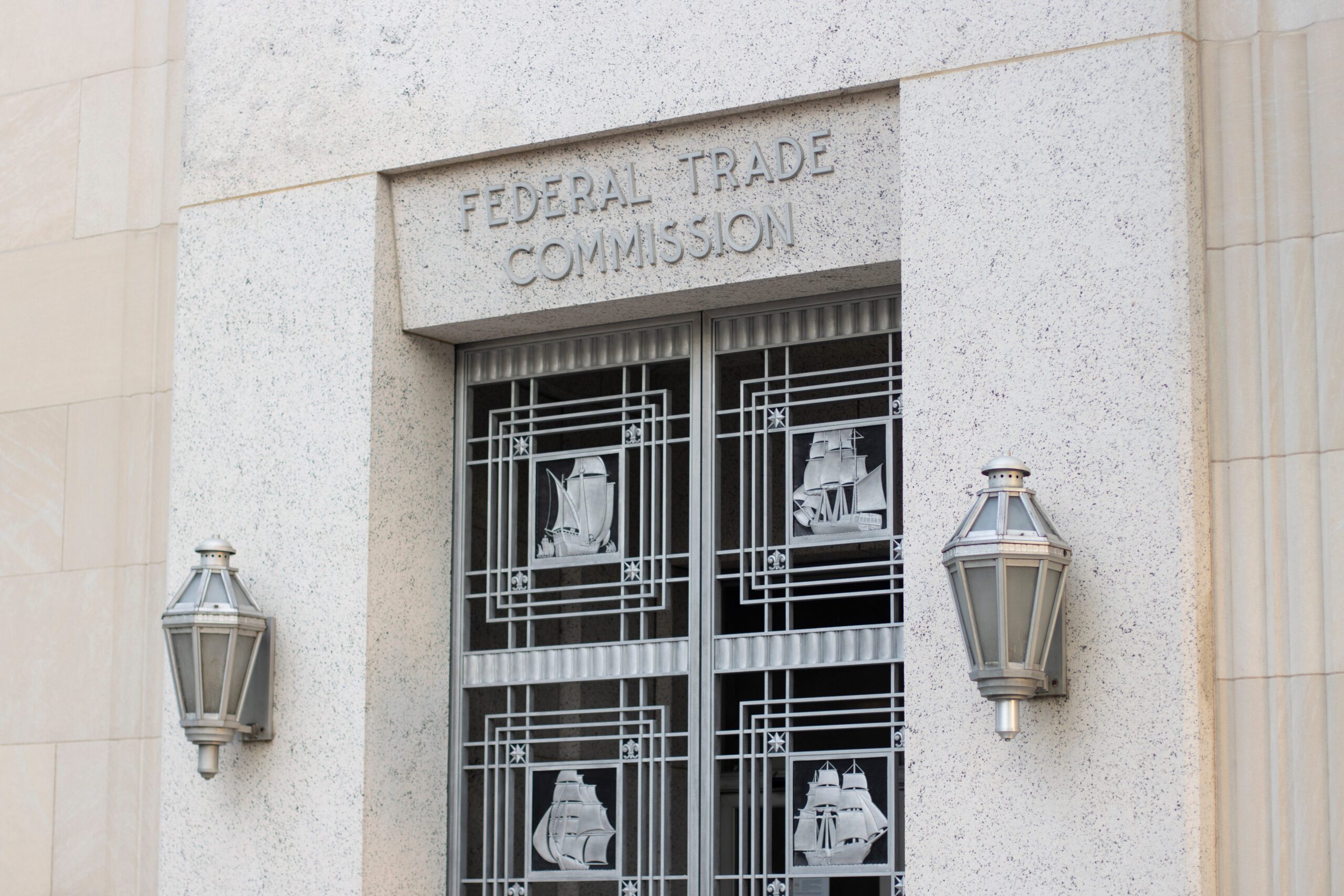
On March 18, 2026, the Federal Trade Commission announced a $17 million settlement with Xponential Fitness, the parent of Club Pilates, Pure Barre, YogaSix, StretchLab, and BFT. It is the largest monetary redress for franchisees in the history of Franchise Rule enforcement.
The reaction in franchise circles was mostly about the number. That is the least interesting part. What matters for anyone who franchises a business, or is thinking about it, is that none of the conduct at issue was unusual. There was no elaborate scheme or fraud.
The landmark settlement stems from simple FDD disclosure failures many franchise systems may view as inconsequential: an optimistic opening timeline, incomplete executive history, and an outdated franchisee contact list.
The franchisor takeaway from this settlement is significant. Inaccurate FDD language, easily overlooked as minor or harmless disclosure errors and rarely subject to FTC enforcement, could now mean significant and costly liability exposure for franchisors.
⚠️ The Misreading Worth Correcting
Many franchisors concluded that FTC franchise enforcement would wind down under the current administration. The Franchise Rule has not been rewritten and no sweeping new rule arrived in 2026, so the assumption was that pressure had eased. Xponential says otherwise. It was among the first major actions of the FTC’s Joint Labor Task Force and the first that task force brought under the Franchise Rule. The theory of enforcement changed. The enforcement did not stop.Table of Contents
- What Xponential Was Actually Accused Of
- The Enforcement Pattern Behind It
- Time to Open: The Claim That Did the Damage
- Item 20 and the Franchisee Contact List
- Undisclosed Fees and the Operations Manual
- Non-Disparagement and Franchisee Communications
- Keeping the FDD Current Under NASAA’s Guidance
- Franchising From Oklahoma
- The Self Audit Worth Running This Quarter
- Frequently Asked Questions
What Xponential Was Actually Accused Of
The FTC’s complaint alleged violations of both Section 5 of the FTC Act and the Franchise Rule. Four categories of failure, none of them unusual.
Opening timelines. The FTC alleged Xponential told prospects that studios could typically be fully operational within six months of signing. In reality, studios generally took more than a year, and in multiple cases never opened at all.
Executive history. The complaint alleged the company failed to disclose that its CEO had been involved in the sale and operation of franchises and had repeatedly been sued for fraud, and failed to disclose that a former president of franchise development had filed for bankruptcy. All of that is required disclosure.
Former franchisee contact information. The FTC alleged Xponential did not report names and contact information for franchisees who had ceased operating in the prior year, and that what was disclosed was often outdated. The effect was to prevent prospects from assessing turnover and talking to people who had left.
Delivery timing. The complaint alleged accurate and complete FDDs were not delivered within the 14 day requirement before prospects committed to a ten year agreement and paid roughly $45,000 per studio on average.
Read that list again as a franchisor. Every one of those is an operational discipline problem rather than a legal theory problem. Nobody needs a novel interpretation of the Franchise Rule to end up there.
The Enforcement Pattern Behind It
Xponential did not come out of nowhere. There is a three case arc worth understanding, because it shows what the agency looks for.
In 2022 the FTC sued BurgerIM over false promises to franchisees. In October 2024 it brought an action against Qargo Coffee and its founders, alleging failures to disclose a founder’s ties to BurgerIM and a bankruptcy history, along with claims that stores could open in about four months. The proposed order carried a $1.3 million judgment, suspended to $30,000 based on inability to pay, and it required Qargo to notify franchisees of a right to rescind without penalty and barred enforcement of noncompete provisions against those who rescinded.
Then Xponential in March 2026, at $17 million. Trade coverage of the Qargo order noted the company had signed nearly 60 agreements while listing only two franchised units at the end of 2023, a gap between sales and openings that is itself a warning sign.
💡 The Remedy Is Scarier Than the Fine
Franchisors fixate on penalty amounts. Look at the Qargo remedy instead. Rescission rights offered to every franchisee, plus an inability to enforce noncompetes against anyone who takes them. For a young system, that is not a fine. That is the system unwinding. A franchisor with sixty agreements and thin capitalization does not survive a mass rescission right, regardless of what the dollar judgment says.Two themes run through all three cases. First, the FTC keeps returning to the same disclosure items: executive background, litigation and bankruptcy history, time to open, and the ability of prospects to reach former franchisees. Second, the agency treats optimistic statements made during the sales process as actionable even when the FDD itself is technically compliant. What your development team says on a call is part of the offer.
Time to Open: The Claim That Did the Damage
Of everything in the Xponential complaint, the opening timeline allegation is the one most likely to appear in an ordinary franchise system, because the pressure to make it is constant.
Franchise development is a sales function. Prospects want to know how quickly they will be generating revenue, and the honest answer is usually longer than the prospect wants to hear. The gap between the fastest opening a system ever achieved and the median opening is often enormous, and it is very easy to quote the former.
Three protections are worth building in.
Measure the actual distribution. Track signed to open time for every unit, calculate the median and the range, and update it at least annually. If you cannot produce that number on demand, your development team is quoting something they made up.
Control what gets said, not just what gets written. Provide development staff with an approved script for timing questions and audit calls periodically. The FTC’s theory in these cases reaches oral representations. A compliant FDD does not immunize a sales conversation.
Disclose failure to open. A system where units are signed and never open has an outcome that prospects need. Xponential’s complaint specifically flags studios that never opened at all. Burying that inside optimistic averages is precisely the conduct at issue.
Item 20 and the Franchisee Contact List
This is the most commonly neglected disclosure obligation in franchising, and it is neglected because it is administratively annoying rather than because anyone decides to hide something.
The Franchise Rule requires disclosure of outlet counts and transfers along with names and contact information for franchisees, including those who left the system during the prior fiscal year. The purpose is straightforward: a prospect should be able to call people who quit and ask why.
Systems fail here in predictable ways. Contact information goes stale because nobody updates it after a departure. Franchisees who transferred, terminated, or simply stopped operating get omitted because the internal tracking never captured them cleanly. Multi unit operators get counted inconsistently. And in some systems the omissions correlate suspiciously with the least happy departures, which is the version that turns an administrative failure into an enforcement theory.
✅ Build the Departure Protocol Now
- Capture a forwarding address, phone number, and email at the moment any franchisee exits, as part of the termination or transfer closing checklist
- Reconcile the outlet table against your point of sale, royalty, and technology systems rather than against a spreadsheet somebody maintains by hand
- Verify contact information before each annual FDD update rather than carrying it forward
- Document the attempt when a former franchisee cannot be reached, so the gap is explained rather than unexplained
- Never let departure disclosure decisions run through the person whose compensation depends on franchise sales
Undisclosed Fees and the Operations Manual
In July 2024 the FTC issued staff guidance addressing a practice that had become widespread: introducing new fees on franchisees through unilateral changes to the operating manual rather than through the FDD.
The guidance itself is direct. Required fees must be disclosed in the FDD. If a franchisor imposes or collects a fee through the operating manual or otherwise that was not disclosed in the FDD and included in the franchise agreement, the franchisor may be engaging in an unfair act or practice under Section 5, in addition to violating the Franchise Rule. Technology fees, payment processing fees, mandatory marketing platform charges, and required vendor rebates are the usual suspects.
There is a genuine business tension here worth naming honestly. Systems have to evolve. A brand that cannot adopt a new point of sale platform or a new marketing technology because the fee was not contemplated in a document drafted four years ago has a real operational problem. The answer is not to pretend the tension does not exist. The answer is to build fee flexibility into the disclosed structure from the beginning, with defined categories, caps, and change mechanics that appear in Items 5, 6, and 7 and in the franchise agreement, rather than smuggling fees in through the manual later.
Note that state regulators reached this conclusion before the FTC did. Washington and California both opined on undisclosed fees before the federal guidance issued, which matters for any system selling into registration states.
Non-Disparagement and Franchisee Communications
The same July 2024 action included a policy statement asserting that it is unlawful for a franchisor to use contract provisions, including non-disparagement, goodwill, and confidentiality clauses, in ways that restrict franchisees from communicating with government officials or reporting potential legal violations. That reaches franchise agreements, termination agreements, transfer agreements, and settlement agreements.
Two honest caveats. The policy statement passed on a 3 to 2 vote, and both dissenting commissioners argued it went beyond nonbinding guidance and effectively attempted to change the law. One of those dissenters, Andrew Ferguson, now chairs the Commission. So the policy statement’s durability is a fair question.
The practical answer is that it does not much matter. Xponential demonstrates the Commission will bring Franchise Rule actions, and a clause that chills franchisee complaints is a bad fact in any enforcement posture regardless of whether a policy statement survives. A narrow provision addressing demonstrably false statements and genuine trade secret protection accomplishes what a legitimate brand actually needs. A broad gag clause accomplishes very little except creating an exhibit.
Review your confidentiality provisions with the same eye. Language drafted to protect operating methods and supplier terms should say so, rather than sweeping broadly enough to cover a franchisee’s complaint about the franchisor.
Keeping the FDD Current Under NASAA’s Guidance
The federal Franchise Rule was not overhauled for 2026. The 23 items, the 14 day delivery requirement, and the annual update deadline running 120 days after fiscal year end all carry forward. The real shift came from the states.
In August 2025 the North American Securities Administrators Association Franchise Project Group issued guidance on how shifting market and economic conditions affect FDD disclosures, specifically flagging Items 5 through 7, 11, and 19. The International Franchise Association publicly welcomed it, which tells you the industry read it as workable rather than hostile.
The substance is a warning about disclaimers. Inflation, supply chain disruption, labor costs, and tariffs have moved real numbers, and a franchisor cannot satisfy its obligation by adding cautionary language about economic uncertainty while leaving stale figures in place. If your Item 7 estimated initial investment range was built on 2023 construction and equipment costs, a disclaimer does not fix it. Updated numbers do.
📅 The Compliance Calendar
Federal: The FDD must be updated within 120 days after your fiscal year end. For calendar year franchisors that is April 30. Material changes require amendment during the year, not at the next annual cycle.State registrations: Renewal deadlines in registration states frequently run earlier than the federal date, and a lapsed registration means a dark period during which you cannot sell in that state.
Practical planning: Start the update roughly 90 days before your deadline. Financial statement preparation, cost data collection, and outlet reconciliation take longer than franchisors expect, and rushing produces exactly the errors these enforcement actions are built on.
On financial performance representations, one point is often misunderstood. Under NASAA’s commentary, the required admonition that individual results may differ is meant to inform prospects. It is not a mechanism for disclaiming responsibility for the representation, and a franchisor may not require a prospect to waive reliance on anything stated in the FDD. If your Item 19 is followed by language telling prospects not to rely on it, that language is a problem rather than a protection.
Franchising From Oklahoma
Oklahoma is a favorable place to launch a franchise system, and the reason is what the state does not require.
Oklahoma is not a franchise registration or filing state. There is no state agency review of your FDD, no Oklahoma specific disclosure addendum, and no state franchise relationship law governing termination, renewal, or transfer. Oklahoma does regulate business opportunity sales under the Oklahoma Business Opportunity Sales Act at 71 O.S. Sections 801 and following, and the definition is broad enough that a franchise would otherwise fall inside it. Franchisors are exempt, but the exemption is conditional: it depends on delivering a compliant FDD at least 14 days before the franchisee signs or pays.
That conditionality is the point worth absorbing. In Oklahoma, federal Franchise Rule compliance is not merely a federal obligation. It is the thing standing between you and a state registration regime you have no interest in entering. A franchisor whose delivery timing slips is not just exposed to the FTC. It has arguably lost its exemption from Oklahoma’s business opportunity law.
Two other planning notes for Oklahoma based brands.
Expansion changes everything. The moment you sell into California, New York, Illinois, Maryland, or the other registration states, you enter a filing and review regime with its own calendar. Build that into growth planning rather than discovering it when a prospect appears.
The trademark comes first. A franchise system is a licensed brand. Federal registration of the mark should be secured or well underway before the first FDD, and the system’s trademark position belongs in Item 13 accurately, including any pending oppositions or limitations. Emerging brands frequently rush the FDD while the mark is unresolved.
The Self Audit Worth Running This Quarter
If you take one thing from Xponential, make it this list rather than the dollar figure.
📋 Franchisor Disclosure Audit
- Executive history. Re-run background diligence on every officer and director covered by Items 1 through 4. Prior franchise involvement, fraud litigation, and bankruptcies are disclosable and are exactly where the FTC has been looking.
- Opening timelines. Calculate median signed to open time from real data. Compare it against what your development team says out loud.
- Outlet and contact data. Reconcile Item 20 against operational systems. Verify former franchisee contact information rather than carrying it forward.
- Fee inventory. List every fee, charge, rebate, and required expenditure in the operations manual. Anything not disclosed in Items 5, 6, or 7 and supported by the franchise agreement gets added or removed.
- Cost currency. Rebuild Item 7 against current construction, equipment, and working capital figures rather than adding a disclaimer.
- Item 19 language. Remove any disclaimer that tells prospects not to rely on the representation.
- Restrictive clauses. Narrow non-disparagement and confidentiality language so it cannot be read to restrict reporting to regulators.
- Delivery logs. Confirm you can prove the 14 day delivery for every executed agreement. If the receipt pages are not systematically retained, fix that first.
The delivery log item deserves emphasis. In a dispute, the burden of showing timely delivery of a complete FDD falls on you. Many systems discover during litigation that their receipts were collected inconsistently, which converts a defensible position into an indefensible one.
🔍 Franchising a Concept, or Cleaning Up a System You Already Built?
The disclosure failures the FTC is prosecuting are operational, not exotic.
We are Oklahoma business attorneys and former business owners. We have built and run companies, which means we understand why a franchisor takes shortcuts on the operations manual and why the numbers in Item 7 drift. We also know what that costs.
- FDD preparation, annual updates, and material change amendments
- Franchise agreement drafting and restrictive covenant review
- Disclosure audits and Item 20 reconciliation
- Multistate registration and renewal planning
- Trademark and brand protection for emerging systems
Confidential consultation • Prompt response • Oklahoma franchise counsel
Frequently Asked Questions
-
Did the FTC change the Franchise Rule in 2026?
No. The 23 disclosure items, the 14 day delivery requirement, and the annual update cycle are unchanged. What changed is enforcement posture and state level guidance, particularly NASAA’s August 2025 commentary on keeping cost and performance disclosures current.
We are a small system. Does the FTC really pursue franchisors our size?
Qargo Coffee had signed roughly 59 agreements and only a handful of open units. The judgment was $1.3 million, reduced to $30,000 based on inability to pay, but the order included rescission rights for franchisees. Size is not protection, and for a small system the non monetary remedies are the greater threat.
Our development team quotes opening timelines verbally. Is that a problem if the FDD is accurate?
Yes. The FTC’s theory in these cases reaches representations made during the sales process, not only what appears in the document. A compliant FDD does not immunize an optimistic phone call.
Can we add a technology fee through the operations manual?
Not if it was not disclosed in the FDD and supported by the franchise agreement. FTC staff guidance treats that as a Franchise Rule violation and potentially an unfair practice under Section 5. Build fee flexibility into the disclosed structure instead.
Do we have to disclose franchisees who left?
Yes, including names and contact information for those who ceased operating during the prior fiscal year. Stale or incomplete contact information was one of the specific allegations against Xponential.
Is our non-disparagement clause unlawful?
It depends on scope. The FTC’s position is that such clauses cannot restrict franchisees from communicating with government officials or reporting suspected violations. A narrow clause covering demonstrably false statements and trade secrets is defensible. A broad one is a liability with little upside.
Does Oklahoma require us to register our FDD?
No. Oklahoma is not a registration or filing state. But franchisors are exempt from the Oklahoma Business Opportunity Sales Act only if they deliver a compliant FDD at least 14 days before signing or payment, so federal compliance is what preserves that exemption.
When is our FDD update due?
Within 120 days after your fiscal year end federally, which is April 30 for calendar year franchisors. Registration states often run earlier deadlines, and material changes require amendment when they occur rather than at the next annual cycle.
Can we disclaim reliance on our Item 19 financial performance representation?
No. A franchisor may not disclaim or require waiver of reliance on representations made in the FDD. The required admonition informs prospects that results vary; it is not a shield.
We are thinking about franchising for the first time. Where do we start?
Before the FDD. Secure the trademark, document the operating system, choose the entity structure, and build real unit economics. The FDD describes the business; it cannot substitute for one that has not been properly built.
Franchisors evaluating their exposure may also find it useful to read the buyer side of the same transaction. Our guides on how to review a franchise disclosure document and buying a franchise in Oklahoma describe exactly what a well advised prospect is looking for in your FDD, which is a useful test of your own document. For background, the basics of franchise structure and the SBA Franchise Directory, which matters for any system whose franchisees will seek SBA financing, are both worth knowing, and the FTC’s announcement of the Xponential settlement is worth reading in full.
Disclaimer: This article provides general information about franchise disclosure obligations and recent FTC enforcement. It is not legal advice. Allegations described here are drawn from FTC complaints and settlements and are not findings of fact against any party beyond the terms of the applicable orders. Franchise regulation involves overlapping federal and state requirements that change, and every system presents specific facts. Before preparing, amending, or relying on an FDD, consult qualified franchise counsel.
About Cantrell Law Firm: We are Oklahoma business attorneys and former entrepreneurs who help founders build franchise systems and keep them compliant as they scale. Learn more about our franchise law practice. Contact us to discuss your FDD or your plans to franchise.