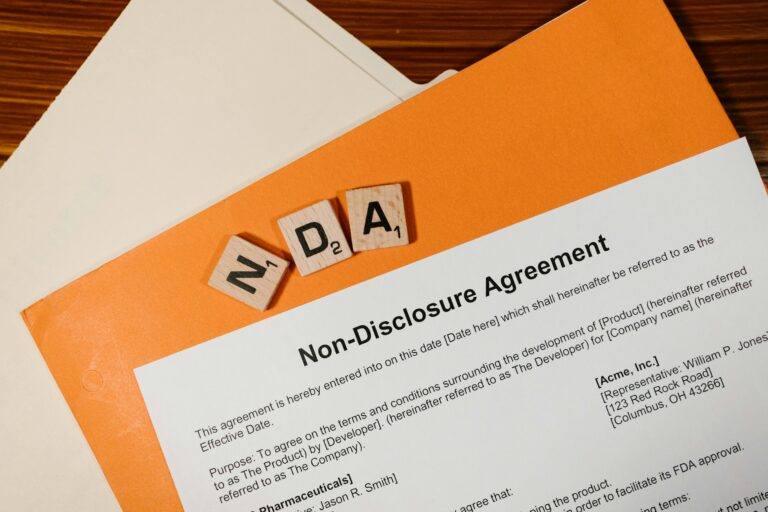


Beneficial Owner Information (BOI) Reporting Is Ending
What the FinCEN Final Rule Means
for Your Business
Published September 3, 2026 | Reading Time: 20 minutes
If you spent late 2024 chasing down driver’s license photos from every member of your LLC, you can stop worrying about it. On August 11, 2026, the Financial Crimes Enforcement Network issued a final rule that permanently removes the requirement for U.S. companies and individuals to report beneficial ownership information under the Corporate Transparency Act. The rule took effect August 14, 2026.
That is good news for the roughly 32 million entities the CTA originally required to report. But “you do not have to file” is not “there is nothing left to think about.” The statute is still on the books, foreign entities registered here still report, your bank still has to know who owns your company, and one state runs its own regime independent of FinCEN.
We have spent two and a half years telling clients to gather ownership records, then telling them to hold. Here is what changed, what did not, and what to do with the folder of passport images on your server.
Table of Contents
- What the August 2026 Final Rule Actually Did
- How We Got Here: Five Years of Whiplash
- Who Still Has to Report
- What Happens to the Data You Already Filed
- The Disclosure Obligations That Did Not Go Away
- State Transparency Laws Are a Separate Problem
- What This Means for Oklahoma Business Owners
- What to Do With the Records You Gathered
- Why This Could Change Again
- Practical Next Steps
What the August 2026 Final Rule Actually Did
The final rule takes the temporary relief FinCEN granted in March 2025 and makes it permanent. Under the revised regulation, “reporting company” now covers only entities formed under the law of a foreign country that have registered to do business in a U.S. state or tribal jurisdiction by filing a document with a secretary of state or similar office.
If your company was formed in Oklahoma, Delaware, Wyoming, Texas, or any other state, you are not a reporting company. That covers the overwhelming majority of operating businesses, holding companies, single member LLCs, family partnerships, and real estate entities that spent 2024 in a panic.
The rule went further than the interim version in two ways that matter for cross border structures. It exempts foreign companies from reporting U.S. person company applicants, meaning the individuals who helped a foreign company register here. And it exempts U.S. persons who already obtained FinCEN identifiers from updating or correcting what they submitted. Treasury announced the change alongside FinCEN.
💡 The Short Version
Domestic entities are out. U.S. persons are out, even when they are beneficial owners or company applicants of a foreign entity that still reports. Foreign entities registered in a U.S. state are still in, but they report only on foreign individuals. FinCEN has said the rule imposes no new obligations on anyone, so there is no transition period and nothing to prepare for.One point of precision: FinCEN did not repeal the Corporate Transparency Act. Congress passed it, and only Congress can repeal it. Treasury exercised regulatory authority to narrow who counts as a reporting company. That distinction matters, and we return to it below.
How We Got Here: Five Years of Whiplash
The CTA was enacted in January 2021 as part of the Anti-Money Laundering Act of 2020, which rode along in that year’s National Defense Authorization Act. The goal was to give law enforcement a way to look behind anonymous shell entities used to move illicit money through the financial system.
Reporting took effect January 1, 2024, and FinCEN began accepting reports that day. Existing entities had until year end. Entities formed during 2024 had 90 days. Companies also carried an ongoing duty to file an update within 30 days of any change in ownership or in a beneficial owner’s address or identification document. FinCEN’s outreach toolkit from that period still describes the original framework.
The burden was never financial, since filing was free. It was the analysis. You had to identify every individual who owned or controlled 25 percent or more of the company or exercised substantial control, collect an unexpired government identification document from each, and monitor for changes indefinitely. For a family business with trusts in the chain, that was not trivial.
Then came the litigation. Federal courts reached different conclusions on the statute’s constitutionality, nationwide injunctions went on and came back off, and deadlines moved repeatedly. By early 2025, many advisors were telling clients to prepare a report and hold it.
Treasury broke the stalemate. In March 2025 it narrowed the definition of reporting company to foreign entities only and announced it would not enforce penalties against U.S. companies or persons. The August 2026 final rule makes that permanent. The U.S. Chamber of Commerce now advises that all entities created in the United States and their beneficial owners are exempt.
⚠️ About the Advice You Got in 2024
If your attorney or CPA told you to file, that was correct at the time. The rules were in effect, the penalties were real, and nobody could reasonably have predicted a full reversal. The relevant question now is what happens to that filing.Who Still Has to Report
The reporting universe is narrow. A company must still file if it was formed under the law of a foreign country and registered to do business in a U.S. state or tribal jurisdiction. Several statutory exemptions survive, so a foreign entity should check the criteria rather than assume it is covered.
A foreign reporting company reports its legal name, any trade names, its U.S. principal place of business address, its foreign jurisdiction of formation, the state or tribal jurisdiction where it first registered, and its taxpayer identification number. FinCEN published a question and answer document alongside the final rule covering these details.
Critically, a foreign reporting company reports nothing about any U.S. person. If a Canadian parent registered in Oklahoma is half owned by an Oklahoma resident, that resident is not reported. U.S. persons are also exempt from providing their information to a reporting company at all, so you can decline that request from a foreign affiliate’s compliance team.
The definition of beneficial owner has not changed for entities that still report: an individual who directly or indirectly exercises substantial control over the company or owns or controls at least 25 percent of its ownership interests. Beneficial owners must be natural persons, so a trust or corporation in the chain requires looking through to the individuals behind it.
✅ Who Is Clearly Out
• Oklahoma LLCs, corporations, and limited partnerships, regardless of size or industry• Delaware and Wyoming holding companies sitting above Oklahoma operating entities
• Single member LLCs holding rental property or mineral interests
• Family limited partnerships and entities owned through revocable or irrevocable trusts
• U.S. persons who are beneficial owners or company applicants of any entity, foreign or domestic
• U.S. persons holding a FinCEN identifier who would otherwise owe an update
What Happens to the Data You Already Filed
This is the question we hear most from clients who complied in 2024. You handed the government your passport image and home address. Where does it go now?
FinCEN has said it is implementing a process to delete information about any individual it reasonably believes was provided by a U.S. person, using indicators such as a U.S. passport or driver’s license. That covers company applicants, beneficial owners, and FinCEN identifier holders, and the agency will coordinate with the National Archives and Records Administration so the deletion complies with federal records laws.
Two caveats. FinCEN has published no completion deadline, so this is a process rather than an event. And the relief turns on FinCEN’s belief that the information came from a U.S. person, so a foreign passport record may be handled differently. There is no form to request deletion. Monitor FinCEN’s beneficial ownership page rather than taking action.
The Disclosure Obligations That Did Not Go Away
Here is where owners get into trouble. “I do not have to file with FinCEN” is being heard as “nobody can ask who owns my company.” That is wrong, and the gap causes friction at a closing or a bank.
Your Bank Still Has to Ask
Under FinCEN’s 2016 Customer Due Diligence Rule, covered financial institutions must identify and verify the beneficial owners of legal entity customers. That obligation is separate from the CTA and was untouched. FinCEN in fact cited the continuing Customer Due Diligence requirement as a reason it was comfortable exempting domestic companies, since banks still collect ownership information and make it available to law enforcement on request.
The rule did get lighter in one respect. A February 13, 2026 order granted exceptive relief from re-verifying beneficial owners at every new account opening for existing customers, and FinCEN updated its CDD Rule FAQs accordingly. Opening a first account at a new institution or bringing on a new lender still triggers a beneficial ownership questionnaire.
Buyers and Investors Still Ask
Every purchase agreement we negotiate contains a capitalization representation: the interests on the disclosure schedule are accurate, fully paid, and free of undisclosed encumbrances. It survives closing, and a defect is a common source of post closing indemnity claims. Nothing here changes what a buyer’s counsel demands during due diligence in a private acquisition.
Contractors, Lenders, and Licensing Boards
If you sell to federal agencies, ownership and control disclosure lives in the acquisition regulations and in Small Business Administration size and affiliation rules, none of which the rollback touches. SBA lenders, title companies, and licensing boards ask their own ownership questions. An operator without a clean ownership chart takes longer to clear all of them.
🏦 The Practical Reality
The federal government stopped asking you to volunteer your ownership structure to a database. It did not stop banks, buyers, lenders, and regulators from asking directly, and they ask far more often with more leverage. The businesses that come out ahead treated 2024 as a records cleanup, not a filing chore.State Transparency Laws Are a Separate Problem
FinCEN’s decision binds FinCEN. It does not bind state legislatures, and at least one state moved to fill the gap.
The New York LLC Transparency Act took effect January 1, 2026, requiring covered LLCs to file a beneficial ownership disclosure or an attestation of exemption with the New York Department of State, plus an annual confirmation. Penalties include fines and suspension of the authority to do business.
Its scope turned on a drafting choice: it incorporated the federal definitions by reference. The legislature passed a bill to decouple after FinCEN narrowed those definitions, but the governor vetoed it in December 2025. The Department of State then confirmed the Act reaches only LLCs formed outside the United States and authorized in New York. Those authorized before January 1, 2026 have until the end of 2026 to file. Later ones have 30 days.
This matters to an Oklahoma operator because of jurisdictional reach, not residency. If your structure includes an entity organized outside the United States that is qualified in New York, it has a filing obligation regardless of where you sit.
⚠️ Watch the Definitions, Not the Headlines
New York is a lesson in statutory drafting. A state law that incorporates federal definitions by reference can expand or contract without the legislature acting, purely because an agency changed a regulation. If a state where you operate enacts a transparency law, the first question is whether the statute defines reporting company itself or borrows the federal one.What This Means for Oklahoma Business Owners
Oklahoma has not enacted a state beneficial ownership reporting law and has no equivalent of the New York statute. For an Oklahoma company with Oklahoma owners and no foreign entities in the structure, the picture is simple: no federal BOI report, no state BOI report. Our Oklahoma business formation attorneys still keep ownership records current for every entity we form, and our corporate strategy and planning attorneys can tell you which lender and state requests still apply to you.
What Oklahoma does require has been on the books for years. Under the Oklahoma Limited Liability Company Act, every LLC files a $25 Annual Certificate with the Secretary of State on the anniversary of its formation or registration. The requirement reaches domestic LLCs, foreign LLCs registered here, registered series, and foreign registered series. The state sends an email reminder ahead of the anniversary, which makes a current email address on the entity record more valuable than most owners realize.
Missing it creates a status problem rather than a fine. An LLC that stops filing loses good standing and can eventually be administratively cancelled. Reinstatement requires filing every delinquent certificate and paying the back fees. We see this discovered when a title company pulls a certificate of good standing three days before closing.
Corporations follow a different track. Oklahoma repealed its corporate franchise tax effective tax year 2024, and corporations file no annual report or certificate with the Secretary of State at all. They file a corporate income tax return with the Oklahoma Tax Commission and maintain a registered agent. Limited partnerships pay $55 annually. The state’s business registration guidance covers the basics, though note it has not been updated for the franchise tax repeal, and filings go through the online business filing portal.
Oklahoma Records Do Not Show What FinCEN Would Have
Oklahoma’s public entity records are thin on ownership. Articles of Organization do not require you to list members. The public record shows entity name, filing number, formation date, registered agent, and registered office. It does not show a cap table. That is exactly the gap the CTA was designed to close, and with domestic reporting withdrawn, the gap is back.
So the only reliable source of truth about who owns your company is your own records. Not the state, not FinCEN. Your operating agreement, membership ledger, unit certificates, and assignment documents. If those are inconsistent, nobody will correct them for you.
Structures That Deserve a Second Look
Oklahoma operators frequently use Wyoming or Delaware holding companies above Oklahoma operating entities, particularly in oil and gas, real estate, and multistate services. All are domestic and all are exempt. But these structures accumulate layers. If yours includes entities whose Annual Certificates lapsed years ago, the current lull is a reasonable time to clean it up. The same goes for series LLC structures, where each registered series carries its own Oklahoma filing obligation.
🧭 Oklahoma Compliance Calendar, Post CTA
• LLC Annual Certificate: due on your formation anniversary, $25, Secretary of State• Limited partnership annual fee: $55 to the Secretary of State
• Corporations: no franchise tax and no annual report, following the 2024 repeal
• Registered agent: continuously maintained at an Oklahoma street address
• Email address on the entity record: keep it current so reminders reach you
• Federal BOI report: no longer required for domestic entities
What to Do With the Records You Gathered
Do not delete the file. That is the common instinct and the wrong one.
The 2024 exercise forced thousands of owners to do something they had put off for years: figure out precisely who owns the company and in what percentages. That work surfaced problems. Membership interests promised in an email and never documented. Operating agreement percentages that did not match the K-1s. A departed partner bought out verbally. A spouse whose interest was never addressed.
Those problems did not resolve when the requirement went away. They are still in the company, and they surface during a sale, a financing, or a death.
Convert the Compliance File Into a Governance File
Turn what you assembled for FinCEN into a maintained corporate record: a current membership or stock ledger showing every holder, units, date acquired, and consideration paid; governing documents that match it; and every transfer, admission, and redemption documented in writing.
If you have never done this, our guide to LLC operating agreements covers the provisions most often missing, and our discussion of transfer provisions every owner needs addresses the exit mechanics that cause the most disputes.
Handle the Identification Documents Carefully
The passport and license images you collected are sensitive personal information about people who trusted you with it, and there is no longer a federal reason to retain them. If you keep them, keep them access controlled, and ask whether you need the images at all rather than the underlying identity data. If you do not, destroy them.
Separately, Oklahoma’s consumer data privacy law takes effect January 1, 2027. It exempts data processed in an employment context, but businesses holding personal information should be building their data handling practices now. We cover the thresholds in our Oklahoma Consumer Data Privacy Act guide.
Why This Could Change Again
Three things are worth keeping in view.
First, the Corporate Transparency Act is still federal law. FinCEN narrowed a regulatory definition, and a future administration could narrow it back through the same rulemaking process without any action by Congress. The final rule itself rests on regulatory authority, not repeal.
Second, rules that sharply narrow a statute’s reach draw challenges that the agency exceeded its authority. The CTA has already generated an unusual amount of litigation.
Third, the policy problem remains. Treasury’s own risk assessments identified anonymous entities as a channel for illicit finance. If a prominent case emerges involving a domestic shell company, pressure to reinstate reporting will be immediate.
🛡️ The Posture We Recommend
Do not build a compliance program for a rule that does not exist. Do keep your ownership records in a condition where you could produce an accurate beneficial ownership report within a week if you had to. That is not a CTA specific investment. It is the recordkeeping that makes a sale close faster and a partnership dispute cheaper to resolve.Practical Next Steps
1. Confirm where every entity in your structure was formed. If all are domestic, you are done with federal BOI reporting. If any was formed outside the United States and is registered in a U.S. state, it needs a separate look.
2. Cancel any BOI monitoring you set up. Calendar reminders, compliance services, the 30 day change tracking. There is nothing to monitor for a domestic entity.
3. Reconcile the ownership records against your governing documents. This is the step with actual value. If the ledger and the operating agreement disagree, fix it while everyone involved is still available and cooperative.
4. Secure or dispose of the identification documents, and verify your Oklahoma filings are current. Pull a certificate of good standing for each entity. Reinstating is cheap now and expensive under deal pressure.
5. Update your standard forms. CTA cooperation covenants in subscription, purchase, and operating agreements are now largely inoperative for domestic entities. Dated language signals to a sophisticated counterparty that your documents have not been reviewed recently.
🚀 Is Your Ownership Structure Actually Documented?
The BOI reporting requirement is gone. The ownership problems it exposed are not.
Our attorneys are former business owners. We have sat on the other side of the table during financings, acquisitions, and partner separations, and we know how fast a messy cap table becomes a valuation discount or a lawsuit. If the CTA exercise surfaced questions you never resolved, this is the right moment to close them out.
- Ownership record and cap table reconciliation
- Operating agreement and bylaw review and cleanup
- Entity structure rationalization across multiple states
- Foreign reporting company analysis under the final rule
- Good standing remediation and reinstatement filings
Licensed in Oklahoma, Colorado, and Wyoming • Attorneys who have run businesses
Frequently Asked Questions
-
Do I still need to file a BOI report for my Oklahoma LLC?
No. Under the final rule effective August 14, 2026, entities formed under the law of a U.S. state are not reporting companies. That includes every Oklahoma LLC, corporation, and limited partnership, regardless of revenue, employee count, or industry.
What if I already filed a BOI report in 2024 or 2025?
Nothing is required of you. FinCEN has said it is implementing a process to delete information it reasonably believes was provided by a U.S. person, including beneficial owners, company applicants, and FinCEN identifier holders. There is no request form and no published completion deadline.
Is the Corporate Transparency Act repealed?
No. The statute remains federal law. FinCEN used its regulatory authority to narrow the definition of reporting company so that it reaches only foreign entities. A future administration could revise that definition again through rulemaking without any action by Congress.
My company is owned by a Delaware holding company. Does that change anything?
No. Delaware is a U.S. state, so a Delaware entity is domestic and exempt. The same is true of Wyoming, Nevada, Texas, and every other state commonly used for holding structures.
We have a foreign parent registered in Oklahoma. What do we do?
That entity may still be a reporting company. It would report its own identifying information plus beneficial ownership for foreign individuals only. No U.S. person information is reported. Several statutory exemptions may also apply, so analyze the entity rather than assume it is covered.
Can my bank still ask who owns my company?
Yes, and it will. The Customer Due Diligence Rule requires covered financial institutions to identify and verify beneficial owners of legal entity customers, independent of the CTA. A February 2026 order relieved banks of re-verifying at every new account opening, but the initial collection requirement stands.
Does Oklahoma have its own beneficial ownership reporting law?
No. Oklahoma has not enacted a state transparency act. Your obligations remain the Annual Certificate for LLCs, the annual fee for limited partnerships, and continuous maintenance of a registered agent. Corporations have no annual report and no franchise tax, which was repealed effective tax year 2024.
Should I delete the passport and license copies I collected?
Decide deliberately rather than defaulting. There is no longer a federal reason to retain them. If you keep them, store them with access controls. If not, destroy them unrecoverably. These are sensitive documents belonging to people who gave them to you for a purpose that no longer exists.
What happens if a future administration brings domestic reporting back?
You would likely receive a transition period, as reporting companies did in 2024. The businesses in the best position would be those whose ownership records are already accurate, because the filing itself is quick when the underlying facts are settled.
Our purchase agreement template has a CTA cooperation covenant. Do we remove it?
It is not harmful, but it is largely inoperative for domestic entities and signals stale forms to opposing counsel. Replace it with a broader ownership information covenant covering whatever a lender, regulator, or acquirer might request, rather than one tied to a specific federal regime.
Disclaimer: This article provides general information about federal beneficial ownership reporting and related state filing obligations. It is not legal advice. Regulatory positions here have changed repeatedly since 2024 and may change again. Whether a specific entity has a reporting obligation depends on its jurisdiction of formation, ownership structure, and applicable exemptions. For guidance on your situation, consult a qualified business attorney.
About Cantrell Law Firm: We are business attorneys who were business owners first. Licensed in Oklahoma, Colorado, and Wyoming, we help entrepreneurs and established operators with entity structure, governance, commercial transactions, and growth strategy. Contact Cantrell Law Firm to discuss your ownership structure and corporate records.